Many studies have shown that the energy transition is technologically feasible. Moreover, technological innovations are developing rapidly. By contrast, people's habits and behavior are changing less rapidly. But only if we are prepared to embrace new technologies and break old habitual patterns will a change of direction actually be possible. This includes, for example, flexible consumption of energy, more closely adapted to the availability of volatile energy sources, a rethink of mobility, and a more economical use of energy.
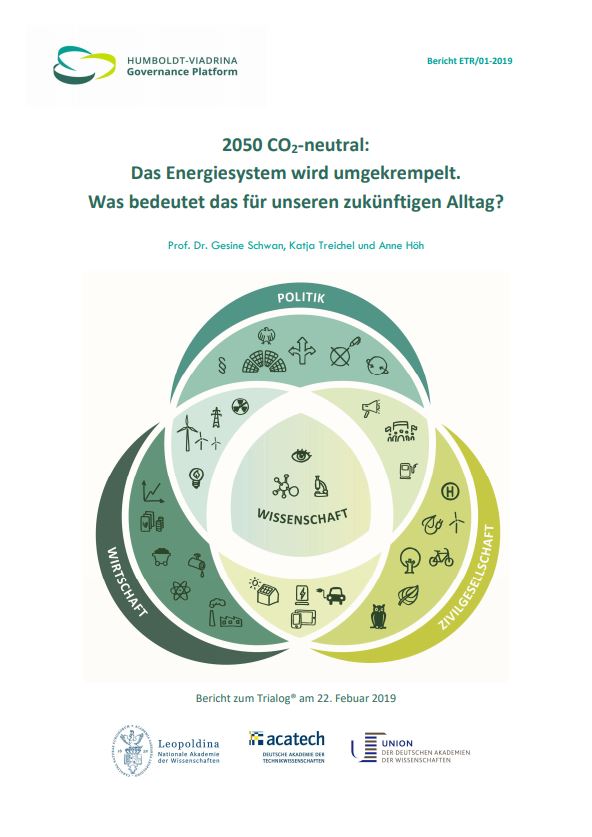
Stakeholders from politics & administration, business, organized civil society and science discussed this in the trialogue "2050CO2-neutral. The energy system is being turned upside down. What does this mean for our future everyday life?"
The main points of the discussion, arguments and justifications are summarized in this report. We wish you interesting reading!