LEAP Transparency

The Local Electricity Access Programme - LEAP Transparency LEAP pursues an innovative approach to improve electricity supply in rural areas through better governance and dialogue between stakeholders. LEAP provides governments, businesses, and civil society organizations with a platform to work together to create the conditions for local electricity supply that meets the actual needs of communities and provides reliable framework conditions for energy investors at the same time. The goal is a fair and sustainable electrification that enables the productive use of electricity and benefits the population of Africa.

Despite recent progress and numerous international initiatives to promote electricity supply, nearly 790 million people worldwide still do not have access to electricity. Around 72 % of them live in sub-Saharan Africa. They rely predominantly on traditional fuels, the use of which is inefficient, unreliable, expensive, and harmful to health. It also hinders social and economic development and contributes to environmental problems and climate change. The Berlin Governance Platform is leading LEAP Transparency together with strong partners from government, the private sector, and civil society. In doing so, it brings its experience with governance, involving various stakeholders.

LEAP Transparency focuses on a regular, ongoing dialogue and the joint resolution of problems to improve the electricity supply in rural areas. Work for that Multi-stakeholder groups (MSGs) at three levels, who we support professionally and organizationally.

LEAP is an National initiative, which is carried by its participants. Currently in three Pilot communities (Ndiob, Bokhol and Baraka/Dakar) are ensuring Local MSGs To ensure that the mini electricity networks there meet the needs of the communities. In Phase II, the number of LEAP communities is to increase to 14 by 2023.

One National MSG in Dakar, Under the chairmanship of the Ministry of Energy and Petroleum, it brings together high-ranking representatives from government, the business sector and organized civil society. It will continue to advise on necessary changes and reforms in the sector and develop corresponding proposals.

One International advisory group Under the chairmanship of Prof. Peter Eigen, co-founder of Transparency International, the experience from Senegal will be used to develop an international governance standard for electricity supply in rural areas and to establish a Expansion of LEAP in Senegal and throughout Africa to prepare.

LEAP Will not replace nor duplicate the many important electrification projects in Senegal. The initiative is a neutral mechanism for governance and competence building, The aim is to flexibly support electrification projects in municipalities, ensuring that these projects are implemented under the best possible conditions, are operated on a long-term basis, and are integrated into broader development and reform initiatives.

The impetus for LEAP was particularly based on recommendations from Africa Progress Panel of the late Kofi Annan Back. In its 2017 report on energy, the panel called for better management of the electricity supply on the continent. LEAP also builds on our direct experience in building Transparency International and the multi-stakeholder initiatives Extractive Industries Transparency Initiative (EITI) and Fisheries Transparency Initiative (FiTI).

Advisory group

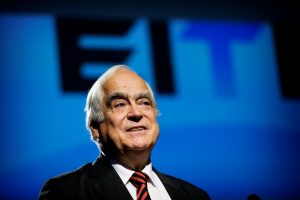
Dr. Peter Eigen, Chairman He is a co-founder and former chairman of Transparency International (TI), the Extractive Industries Transparency Initiative (EITI), and the Fisheries Transparency Initiative (FiTI). Today he is a partner of the Berlin Governance Platform (BGP).

Timon Herzog is the Managing Director of GRIPS Energy.

Maximilian Jarrett is an energy expert and former head of the Africa program at the International Energy Agency (IEA).

Gabriele Schwarz (Bonergie) is Vice President of the Conseil Patronal des Énergies Renouvelables du Sénégal (COPERES), Managing Director of Bonergie Senegal and liaison person for the international advisory group on LEAP-MSG in Senegal.

Abdoulaye Ba He is vice president at Conseil Patronal des Énergies Renouvelables du Sénégal (COPERES)and is head at Compagnie Sahélienne en Énergies Renouvelables (COSEER).

Prof. Eicke Weber He is Vice President of the International Solar Energy Society (ISES) and Co-Chair of the European Solar Manufacturing Council (ESMC). Previously, he was Managing Director of the Berkeley Alliance for Research in Singapore, Head of the Fraunhofer Institute for Solar Energy Systems ISE, and Professor of Physics and Solar Energy at the Albert Ludwig University of Freiburg.

Kerstin Schönherr is the managing director of the BMV Mineral Oil Supply Company.

Professor Gunnar Graef He is an affiliate professor at ESCP and teaches strategy, entrepreneurship, innovation and design thinking at the Paris and Berlin campuses. He is also Managing Partner of Deutsche Ventures and founding chairman of Gräf & Company.

Similar projects

  • Strengthening climate action within social organisations

    Local climate teams strengthen climate action within social organisations by connecting committed individuals and embedding climate issues permanently in the organisations’ work.
  • Local Electricity Access Programme in Senegal ╽ LEAP Transparency

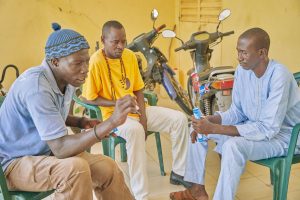
    LEAP Transparency promotes access to clean and affordable energy in rural areas of Africa through transparent, cross-sector collaboration between the political sphere, the private sector and civil society.
  • Energy transition twin city 3.0

    The aim of the „Energiewende Partnerstadt 3.0“ project was to exchange know-how and experience on the local energy transition across national borders, to facilitate technology transfer in the field of renewable energies, and to strengthen cohesion in […]
  • Climate Transparency: Engagement in seven G20 countries

    The Climate Transparency Partnership brings together climate assessments and expertise from organisations in the G20 countries. The Partnership uses independent, comparable and comprehensive data to analyse the G20's progress in transforming [...]
  • The role of social and political actors in climate policy - Social Actors Project

    Socio-political actors in Germany are increasingly working together to advance the socio-ecological transformation. We explore the opportunities of these alliances and alliances to provide advice and positive examples.
  • Energy transition: Ambitious policies and their implementation - learning from good practices in Colombia, Germany, India, Indonesia and South Africa

    The Global Stocktake is clear: All countries need to raise their ambition to curb their emissions effectively, to a degree that is fair to their development status. But ambitious targets [...]
  • Checking implementation of transport climate policies

    This project aims to promote information and experience sharing about the implementation of emission reduction policies in the transport sector between the European Union (EU) and Argentina, Brazil, Colombia, and [...]
  • Climate Transparency

    The Climate Transparency Partnership brings together climate assessments and expertise from organisations in the G20 countries. Since 2014, the partnership has been analysing the G20's progress on climate action using independent, comparable and comprehensive data [...]
  • Climate Compatible Export Credit Policies

    Effective climate policy needs dialogue. In a series of online events, topics relating to international financing for the energy transition in the Asian region were discussed in a national and supranational context.
  • Development of a Climate Policy Implementation Check

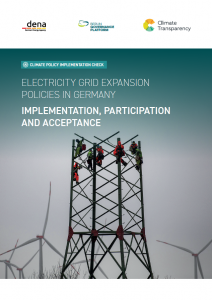
    Ambitious climate targets alone are not enough - political measures must also be implemented in order to achieve these targets. There are already a large number of tools and assessments to evaluate the [...]
  • G20 Acceleration Calls of Climate Transparency

    The G20 Acceleration Calls by the Climate Transparency partnership demand that G20 members step up their climate action in support of the Acceleration Agenda of the UN Secretary-General.
  • Trialogue series "Energy Systems of the Future" (ESYS)

    The Berlin Governance Platform, in cooperation with the academy project "Energy Systems of the Future", conducts trials as sounding boards for the working groups of the academy project.
  • Energiewende PartnerStadt - Sharing municipal knowledge in Europe

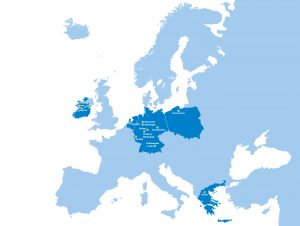
    The aim of the "Energiewende PartnerStadt" project was to exchange expertise and experience on the local energy transition across national borders, facilitate technology transfer in the field of renewable energies and promote cohesion in Europe.
  • Garment Industries Transparency Initiative (GITI)

    The Garment Industries Transparency Initiative (GITI) was a multi-stakeholder partnership with the aim of contributing to the implementation of labour standards in the global garment industries through improved transparency and participation.
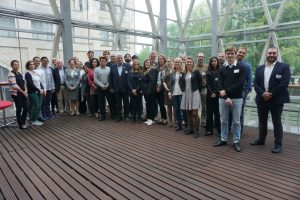
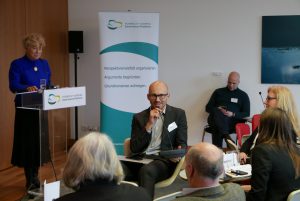
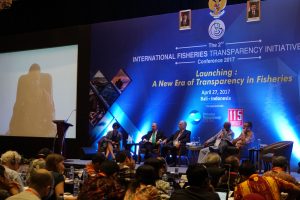
  • Photo at a conference of the Fisheries Transparency Initiative.

    Fisheries Transparency Initiative (FiTI)

    The Fisheries Transparency Initiative (FiTI) is a global multi-stakeholder partnership to strengthen transparency and participation for sustainable fisheries.
  • Centre on Governance through Human Rights

    The Centre on Governance through Human Rights of the Berlin Governance Platform in Berlin advises on governance and human rights issues. Transitional justice in transitional societies, climate justice and cyber justice (human rights [...])
  • Centre for Natural Resource Governance

    The centre promotes cooperation between the public sector, business and civil society to solve global and local challenges.
  • EnVision

    The project "EnVision - Shaping a vision for the energy transition" identifies areas of tension and conflicting values in the energy transition and develops proposals for political decision-makers to develop a common vision.