Matching is a governance format for shaping a reliable and decentralised recording. It brings the Interests, needs and provision for asylum seekers and local authorities together, to identify suitable relocation pathways. By
The format offers an alternative to a random or top-down driven distribution. It purposefully uses the diversity of municipalities and people to achieve a better „Fit“ between asylum seekers and receiving municipalities to create.
Algorithm-based methods can support this process by comparing relevant information from participating municipalities and asylum seekers. The algorithm neither replaces human decision-making processes, nor informed decisions, nor political responsibility. It is a technological tool that helps to identify suitable matches within a transparent and humane process.

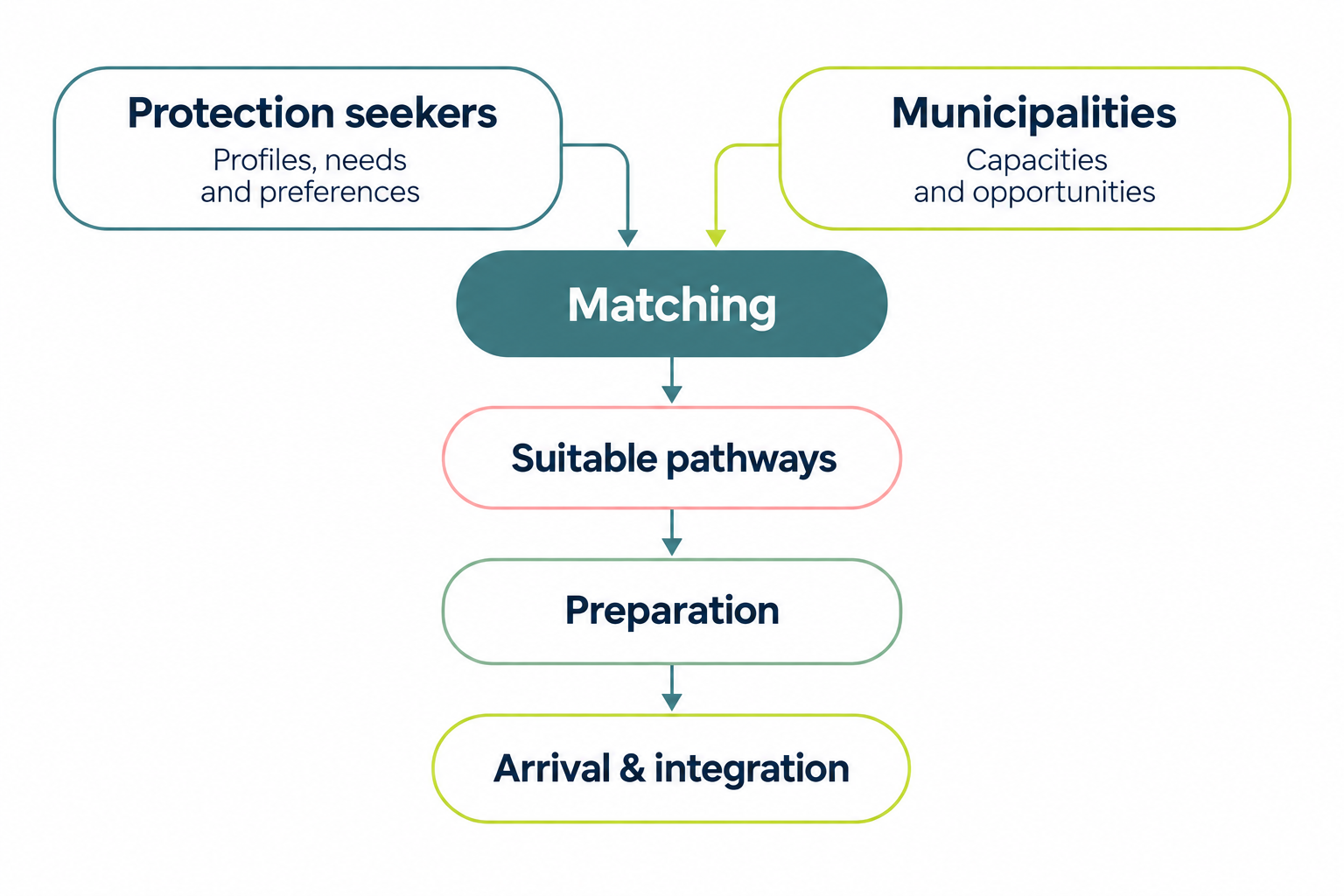
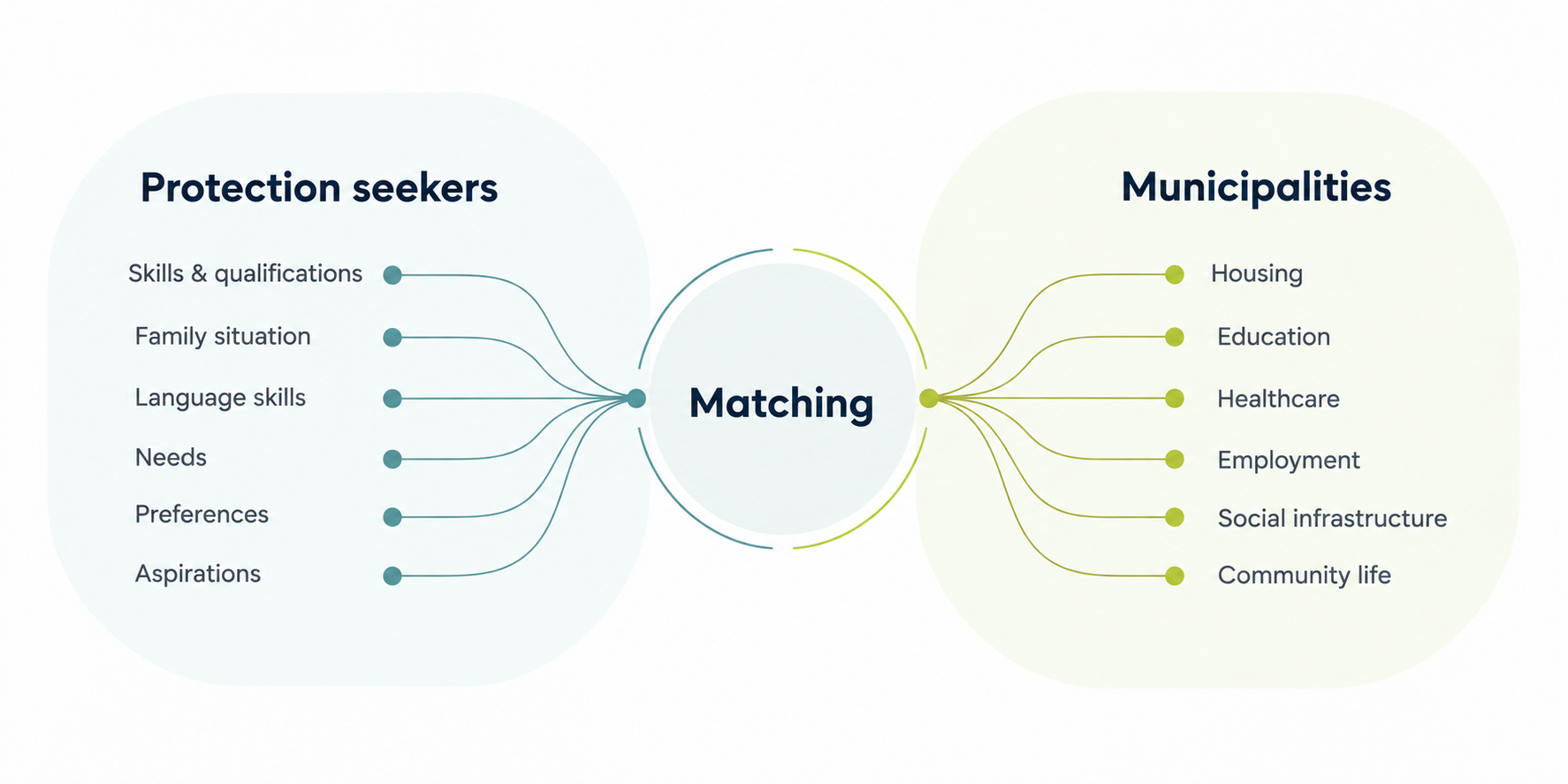
Matching is a structured process that Needs and preferences of those seeking protection with the capacities and possibilities of local authorities merges.
Asylum seekers bring information about their skills, qualifications, family situation, language skills, specific needs, perspectives and preferences a. Local authorities provide information about housing, education, healthcare, employment opportunities, social infrastructure and local community life Ready.
On this basis, the format identifies suitable matches between asylum seekers and welcoming municipalities. The aim is not merely to assign people to available spaces, but rather to better prepared, informed and sustainable reception for all involved .
Matching assumes that a good admission requires that both sides are taken seriously. Municipalities and those seeking protection should therefore be involved in the process at an early stage so that their interests, needs and offers help shape the matching result.
Matching offers those seeking protection a better guidance on potential host local authorities. Understandable information about local conditions and a transparent explanation of why a placement might be suitable support informed decisions about where people can build their new lives.
At the same time, local authorities are given the opportunity to their local capacities and provision to contribute and to prepare a recording accordingly.

algorithm-based methods help to process complex information and to identify suitable matches. Technology must be integrated into a transparent and responsible governance process remain embedded.
The criteria for matching should clear, transparent and non-discriminatory sein. Matching must not become a mechanism of cherry-picking, where exclusively people who are considered particularly easy to integrate are selected.
Local authorities define their local capacities and provision – including housing, schools, childcare, employment and training opportunities, healthcare, language learning provision and civil society support.
Protection seekers need a secure and accessible process, to share information about their skills, needs and preferences. Participation should be voluntary, on informed consent be based on and supported by clear communication.
The process requires the Coordination between local authorities, public bodies, civil society partners, technical providers and asylum seekers. Matching does not end with the identification of a suitable match. This must be followed by Preparation, communication and assistance with arrival and integration follow.
Matching can help to facilitate the reception of people seeking protection more humane, more targeted and more effective design.
It strengthens municipalities by acting as them as active stakeholders in reception and integration incorporates. It empowers those seeking protection by Needs, preferences and perspectives to be taken seriously. And it supports public bodies with relocation more structured, transparent and better prepared design.
The format simultaneously contributes to a change of perspective: Those seeking protection are not viewed solely as a burden to be distributed, but as future residents, with which local authorities can shape a shared future.
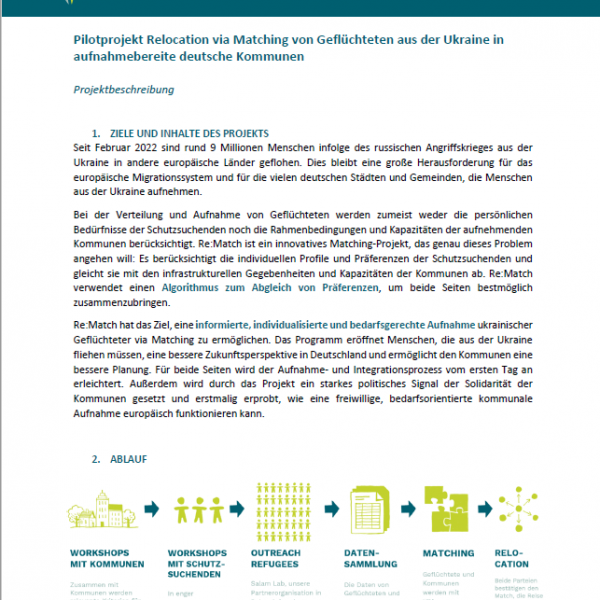
The matching method is used, among other things, as part of Re:Match and Re:MatchJob practically tested. The projects combine the perspectives of those seeking protection and municipalities with data-driven methods to create suitable relocation pathways and better conditions for arrival, participation and labour market integration.