Using an algorithm-based process, we successfully matched and relocated a group of 26 Ukrainian protection seekers from Poland with German municipalities this week.
Using an algorithm-based process, we successfully matched and relocated a group of 26 Ukrainian protection seekers from Poland with German municipalities this week.
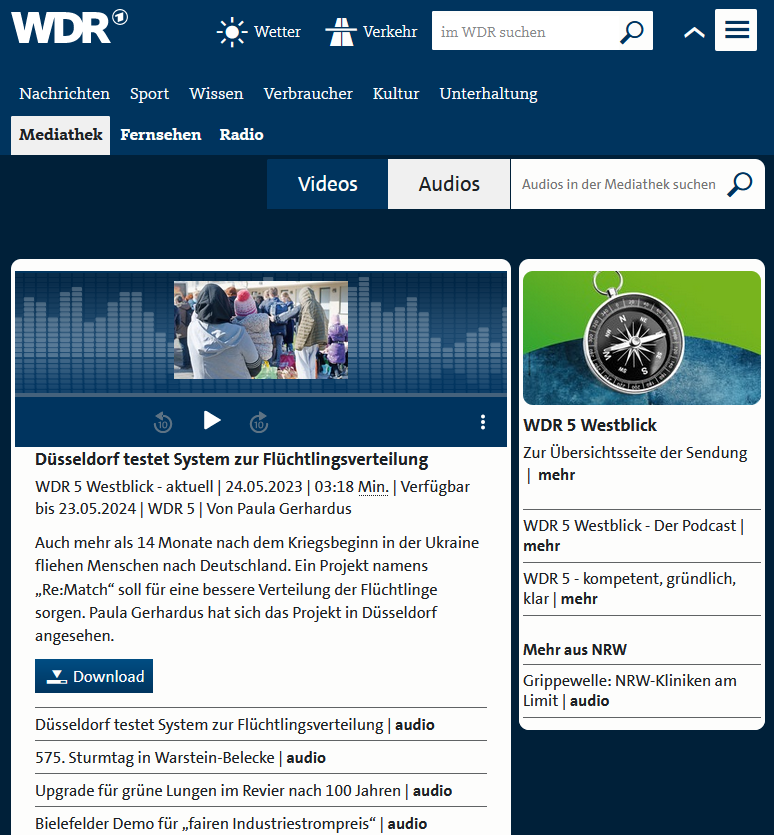
The Re:Match project was profiled in a new WDR audio feature, including the project status in our partner municipality Düsseldorf and our goal to pilot a needs-based and individualized distribution mechanism using an algorithm.
Using an algorithm-based process, we successfully matched and relocated a group of 20 Ukrainian protection seekers from Poland with German municipalities this week.
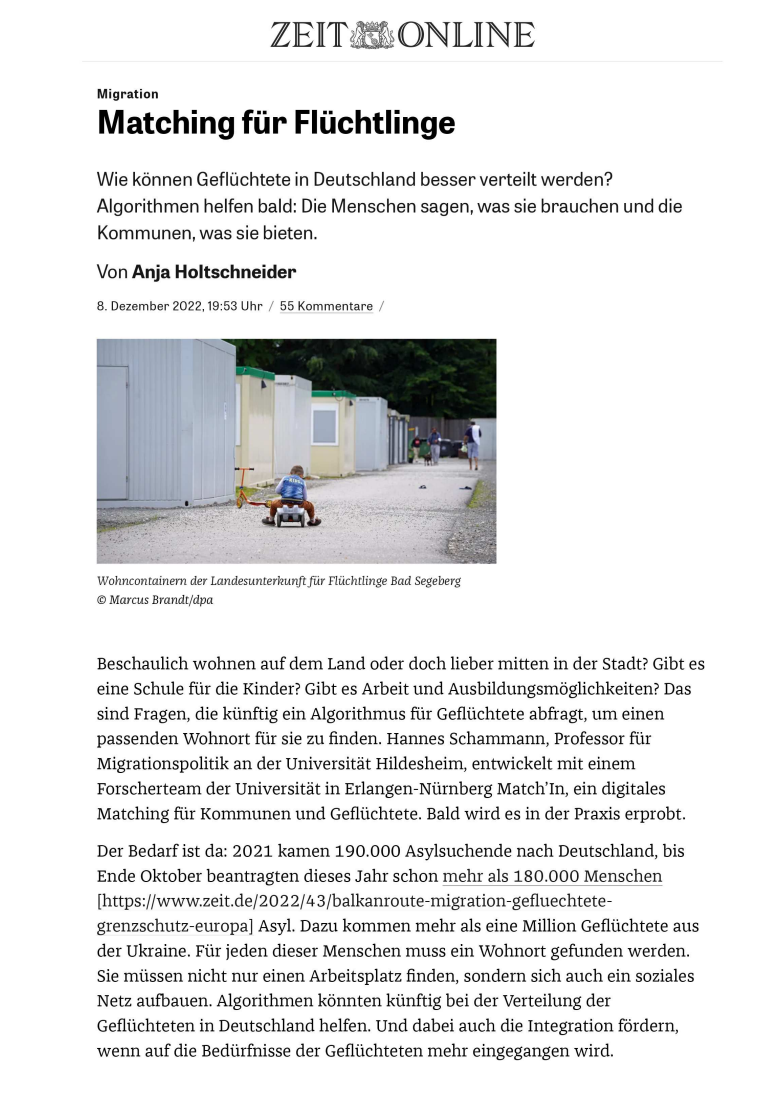
The project Re:Match was presented in a new ZEIT ONLINE article: How can refugees in Germany be better distributed? Algorithms will soon help: People say what they need and the municipalities what they offer.
Our new project Re:Match aims to pilot an innovative model for a better, human rights-based and more sustainable distribution of protection seekers in Europe, thus providing a solution contribution to the current challenges in the reception and (European) redistribution of refugees from Ukraine.
Cities are important sites for understanding migrant integration and refugee protection around the world. Although nation-states typically claim authority over the selection and admission of migrants and refugees, cities tend to be the places where migrants and refugees integrate into the social fabric of society,...