How can political decisions be formulated that address complex problems and are supported by people with different interests? This question is at the heart of the Berlin Governance Platform.
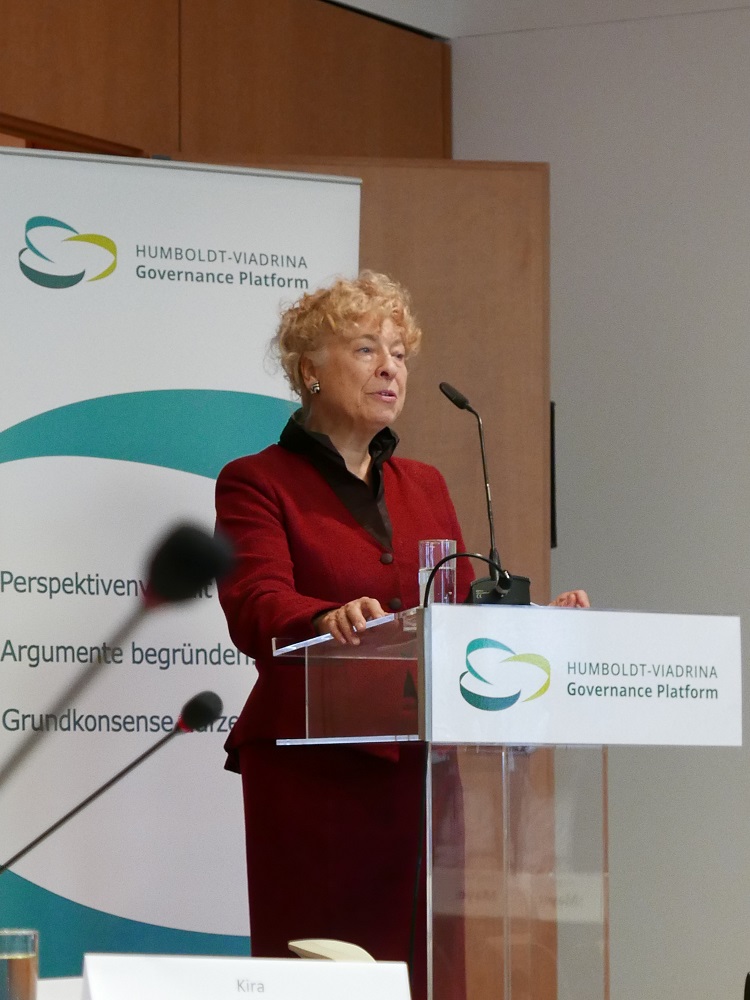
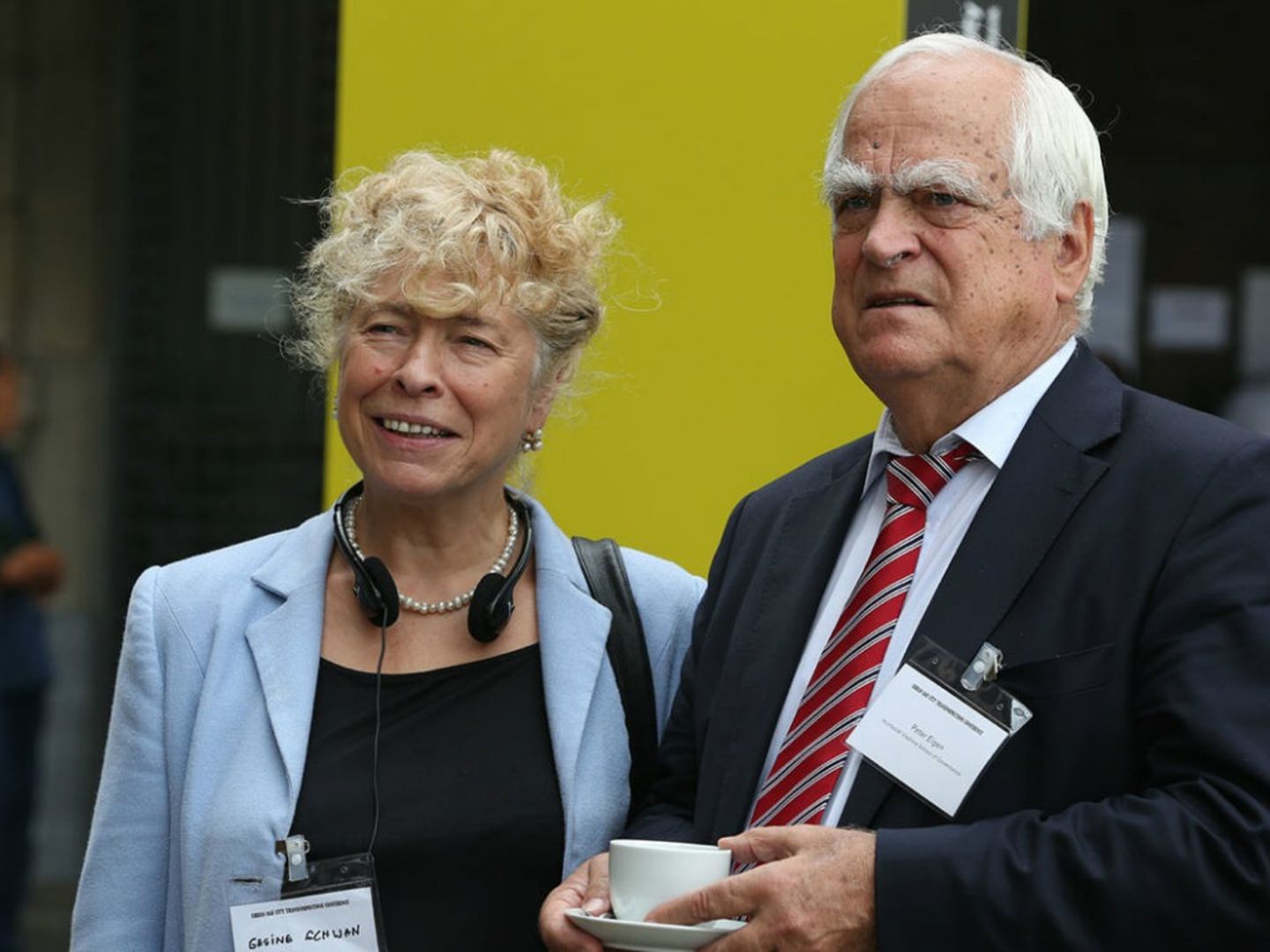
Prof. Dr. Gesine Schwan As a political scientist, Gesine Schwan focused on the gap between scientific knowledge and political practice. She sought out places where long-term strategies could be jointly conceived – with people from politics, business, and civil society. At the HUMBOLDT-VIADRINA School of Governance Trialogues, she developed structured conversations that bring different perspectives and interests together at the table.
Prof. Dr. Peter Eigen Peter Eigen came from international development cooperation. His work on initiatives for transparency and against corruption had shown him how important cooperation between civil society, governments, and businesses is for lasting change. Both of them shared the conviction that new solutions do not emerge solely at the desk or within political institutions.
When the School ended in its current form, they continued this approach together with their fellow activists. In 2014, the non-profit organization HUMBOLDT-VIADRINA Governance Platform was established. From the outset, it worked on Trialogeissues related to society and on international initiatives for transparency and participation.
This work led to the development of an organization that does not see dialogue as an end in itself. It designs processes in which conflicts are openly acknowledged, knowledge and experiences are brought together, and common action options are developed. Today, for example, this approach is applied in cities and municipalities through local development councils: people from politics, administration, business, and civil society develop recommendations on specific future issues; the decisions remain with the elected bodies.
Since 2022, the organization has been named Berlin Governance Platform – BGP. Its work now ranges from municipal transformation issues to migration to international governance initiatives. What connects these fields is the question of their founding: How do we create spaces and reliable processes in which a diverse society can shape its future democratically?
Gesine Schwan summed up this idea in an interview on the tenth anniversary: „We need to develop institutions that explicitly address this basic consensus.“
Today, BGP is developing and testing such formats – with the aim of making them usable beyond individual projects. In this way, it is working on the democracy of tomorrow by making democratic understanding possible today.