Multi-stakeholder housing conversations.

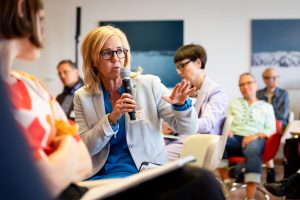
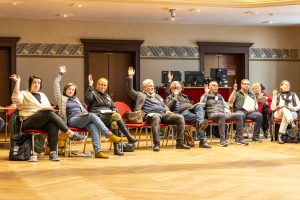
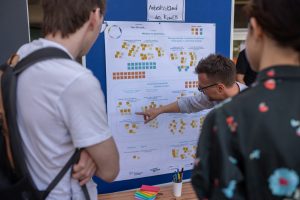
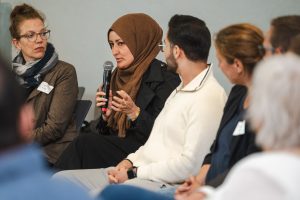
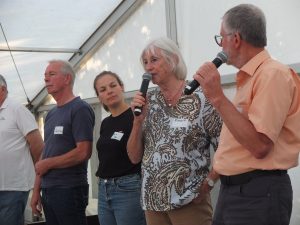
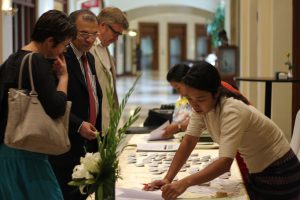
In a series of talks on social housing in cities (2019 and 2020), representatives of politics and administration, business and organized civil society were brought together to discuss current challenges in the field of housing.

Cities are breeding grounds for social change – both due to their high population density and their diversity. Urban spaces and neighborhoods are rapidly becoming experimental and learning spaces for social, cultural, technical and economic innovations. Increasing conflicts over land use call for a productive and understanding-oriented debate between the various interest groups in order to jointly develop sustainable solutions for living together in the future.

We are convinced that strengthening participation on the ground not only leads to sustainable urban development, but also contributes to a trusting culture of discussion and cooperative networking. After all, the major urban policy challenges of the future can only be overcome by working together. Viable solutions for sustainable urban development require close and democratically organized cooperation between all stakeholders.

We use special multi-actor formats such as the Trialogues ® of the Berlin Governance Platform in our urban development projects to network actors from politics and administration, business and organized civil society, and academia. For the synergy of city-related research and urban society actors, we thereby organize a systematic exchange in order to develop new approaches to solutions and to explore joint options for action.

Multi-stakeholder housing conversations (2019-2021).

Housing in metropolitan areas presents urban society, politicians and private housing companies with challenging questions about rents, new construction, neighborhood development and densification. Due in particular to the continuing population increase, demand for housing often exceeds supply. Rising housing costs, conflicting interests in the real estate sector and hardened fronts between the players involved characterize the current tense debate. The protest of residents is often directed against the increasing privatization of the housing market and against gentrification processes. 

In order to pacify urban conflicts in the sense of a culture of participation at the city level, there is a need for a common level of discussion among the various actors and an exchange about the responsibility of private housing companies as well.

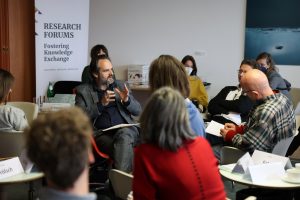
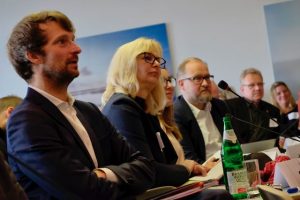
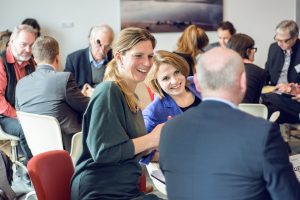
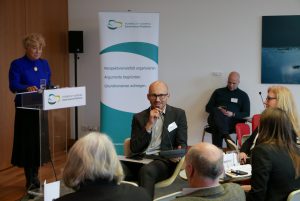
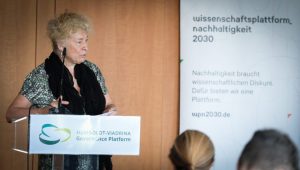
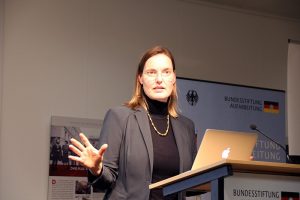
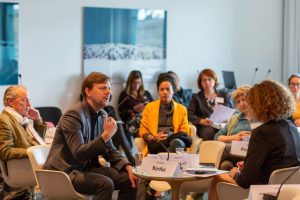
The multi-stakeholder talks on housing supply in cities offer the opportunity to discuss in a familiar setting how the ability of the actors involved to communicate and compromise can be promoted and which options for action can be used to bring the conflicting positions together. Organized by the Berlin Governance Platform and moderated by Prof. Dr. Gesine Schwan, 10-15 stakeholders discussed current issues of housing supply in Berlin at the Allianz Forum.

We are convinced that decisions relevant to society can only be strengthened and legitimized if the exchange between politics and administration, business, organized civil society and science is improved.

DURATION

2019 - 2021

TEAM

Dr. Melanie Kryst

More projects

  • Trialog zur Reform der Erbschaftssteuer

    In einer mehrteiligen Dialogreihe bringen wir unterschiedliche gesellschaftliche Perspektiven zusammen, um Reformoptionen für die Erbschaftsteuer zu beraten und zukunftsweisende Empfehlungen für die Bundesregierung zu entwickeln.
  • Kommunale Entwicklungsbeiräte in der Wärmewende

    Wir begleiten über ein Jahr lang augewählte Kommunen bei der Entwicklung praxisnaher, breit getragener Strategien für die lokale Wärmewende in Kommunalen Entwicklungsbeiräten.
  • Kommunaler Entwicklungsbeirat in Cottbus/Chóśebuz

    Inmitten der Innenstadt von Cottbus befindet sich eine prominente Brachfläche, die kürzlich von der Stadt erworben wurde. Ein Kommunaler Entwicklungsbeirat versammelt diverse Akteur*innen, um Empfehlungen für die zukünftige Nutzung dieser […]
  • Kommunaler Entwicklungsbeirat in Frankfurt (Oder)

    Ein Kommunaler Entwicklungsbeirät entwickelte ein Leitbild für die Entwicklung einer Freifläche direkt an der Stadtbrücke, die Frankfurt (Oder) und Słubice miteinander verbinden.
  • Energiewende Partnerstadt 3.0

    Ziel des Projekts „Energiewende Partnerstadt 3.0“ ist es, über Ländergrenzen hinaus Know-how und Erfahrungen zur lokalen Energiewende auszutauschen, den Technologietransfer im Bereich Erneuerbare Energien zu erleichtern und den Zusammenhalt in […]
  • Kommunaler Entwicklungsbeirat in Duisburg

    Duisburg-Hochfeld, einst von der Schwerindustrie geprägt, steht prototypisch für Gebiete im Ruhrgebiet, die vom Strukturwandel betroffen sind. Ein kommunaler Entwicklungsbeirat berät über Möglichkeiten, die Lebensqualität der Bürger*innen im Stadtteil zu […]
  • Kommunaler Entwicklungsbeirat in der Samtgemeinde Meinersen

    Ein kommunaler Entwicklungsbeirat spielt eine Schlüsselrolle bei der Gestaltung von Klimaschutzmaßnahmen in der niedersächsischen Samtgemeinde Meinersen. Dieser Beteiligungsrahmen zielt darauf ab, den Entwicklungsprozess transparent zu gestalten, die Legitimität der erarbeiteten […]
  • Offering refugees a home in Berlin

    How can refugees find adequate and affordable housing in Berlin? In the midst of a tight housing market and numerous barriers to access, we are developing ideas for possible solutions with policymakers, civil society and the real estate industry.
  • A municipal development advisory board accompanies the urban development in Weißwasser/O.L.

    Kommunaler Entwicklungsbeirat in Weißwasser/O.L.

    Für die Stadt Weißwasser stehen in den nächsten Jahren große Veränderungen an: die zentrale Versorgung mit Braunkohle wird ab 2029 ein Ende haben. Ein Kommunaler Entwicklungsbeirat berät zur Zeit, wie […]
  • In Hoyerswerda, a municipal development advisory board discusses the use of green and demolition sites

    Kommunaler Entwicklungsbeirat in Hoyerswerda

    In Hoyerswerda berät ein kommunaler Entwicklungsbeirat über die Nutzung von städtischen Grün- und Abrissflächen. Es soll ein „Grüner Saum“ entstehen.
  • A municipal development advisory council accompanies the community of Kalletal

    Kommunaler Entwicklungsbeirat in Kalletal

    In Kalletal erarbeitete ein kommunaler Entwicklungsbeirat Empfehlungen zu Verbesserung der kommunalen Gesundheitsversorgung.
  • In Niesky, a municipal development advisory board discusses the city's economic future.

    Kommunaler Entwicklungsbeirat in Niesky

    In Niesky beriet ein Kommunaler Entwicklungsbeirat über die wirtschaftliche Zukunft der Stadt.
  • A municipal development advisory board accompanies urban development in Rottenburg am Neckar

    Kommunaler Entwicklungsbeirat in Rottenburg am Neckar

    Ein Kommunaler Entwicklungsbeirat beriet in Rottenburg am Necker über Möglichkeiten zu Stadtentwicklung in Krisenzeiten.
  • Photo of participants of the trialogue "Nutrition, Health and Social Cohesion

    Trialogue Series Social Cohesion

    As part of BUA's "Grand Challenge Social Cohesion" initiative, the three-part trialogue series "Social Cohesion" was held in late summer and fall 2022. The focus was on the transdisciplinary exchange of 6 Exploration Projects [...]
  • A municipal development advisory board in Herne developed recommendations for the design of an inner-city brownfield site

    Kommunaler Entwicklungsbeirat in Herne

    Ein Kommunaler Entwicklungsbeirat entwickelte 2022 Empfehlungen zur Gestaltung einer 25 Hektar großen industriellen Brachfläche inmitten der Stadt Herne.
  • Research Atlas "Social Cohesion" in cooperation with BUA

    Research Atlas "Social Cohesion

    The interactive research atlas "Social Cohesion" visualizes the current research activities on the topic of social cohesion in the Berlin research area.  
  • Participatory development in Lusatia

    The coal phase-out is linked to the need to make our society and our economy more climate- and resource-friendly. Surveys show that a large part of the population supports these climate policy goals. But if [...]
  • Multi-stakeholder housing conversations.

    In a series of talks on social housing in cities (2019 and 2020), representatives of politics and administration, business and organized civil society were brought together to discuss current challenges in the field of housing [...]
  • Trialogue series Future of Democracy

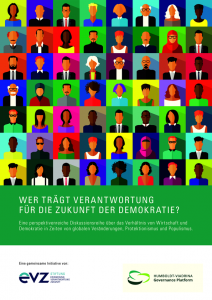
    "Who bears responsibility for the future of democracy? – A perspective-rich discussion series on the relationship between business and democracy in times of global change, protectionism and populism." - a joint [...]
  • Guidelines for participation in the housing construction of the state-owned

    In 2017, the Berlin Governance Platform, in cooperation with the state-owned housing associations, conducted a series of trialogues on the topic of "Participation in Housing" in order to discuss these challenges of the growing city in a community-oriented manner and [...]
  • Trialog Series: German Special Path?

    On behalf of the Senate Department for Urban Development and Housing and the District Office Mitte of Berlin, we implement digital citizen participation: The project "Voices at the Push of a Button" collects ideas via voice messages for the [...]
  • The working time dialog in trialog format

    Against the background of technological innovations as well as demographic and cultural changes, which are accompanied by new demands on the organization of work, ways of designing an innovative working time policy will be discussed.
  • The logo of the Berlin Governance Platform in three colors as favicon. We work as a non-profit society in the service of promoting good governance, developing projects and concepts. We create spaces for all those who want to help shape a just and sustainable future.

    Trialogues on the compatibility of family and career as partners

    Trialogue on the topics of work (time) culture and equality with the Federal Ministry for Family Affairs, Senior Citizens, Women and Youth.
  • Voices at the touch of a button: citizen participation via voice messages

    On behalf of the Senate Department for Urban Development and Housing and the District Office Mitte of Berlin, we implement digital citizen participation: The project "Voices at the Push of a Button" collects ideas via voice messages for the [...]
  • In Arneburg-Goldbeck, a community development advisory board advises on the development of the community

    Kommunaler Entwicklungsbeirat in Arneburg-Goldbeck

    In Arneburg-Goldbeck sollte ein Kommunaler Entwicklungsbeirat Empfehlungen zu Verbesserung der Mobilität im ländlichen Raum erarbeiten.
  • Trialogue Series "Energy Systems of the Future" (ESYS)

    In cooperation with the Academies Project "Energy Systems of the Future", the Berlin Governance Platform conducts trialogues as sounding boards for the working groups of the Academies Project.
  • Trialogue "Science Platform Sustainability 2030

    The Berlin Governance Platform, in cooperation with the Mobility Working Group of the Science Platform Sustainability 2030, conducted the trialogue "Sustainably on the Move – Making Mobility Attractive Now".
  • Energy Transition PartnerCity - Sharing Municipal Knowledge Europe-wide

    The aim of the "Energiewende PartnerStadt" project was to exchange know-how and experience on local energy transition across national borders, to facilitate technology transfer in the field of renewable energies and to promote cohesion in Europe [...]
  • Added value as a driver of energy-efficient building refurbishment

    The project "Additional benefits as drivers of energy-efficient building refurbishment" aimed to clarify the societal debate on the multiple benefits of energy-efficient refurbishment.
  • Garment Industries Transparency Initiative (GITI)

    The Garment Industries Transparency Initiative (GITI) is a multi-actor partnership with the goal of contributing to the implementation of labor standards in the global garment industries through improved transparency and participation.
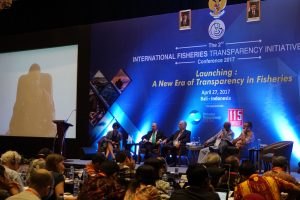
  • Photo at a Fisheries Transparency Initiative conference.

    Fisheries Transparency Initiative (FiTI)

    The Fisheries Transparency Initiative (FiTI) is a global multi-actor partnership to strengthen transparency and participation for sustainable fisheries.
  • Center on Governance through Human Rights

    The Center on Governance through Human Rights of the Berlin Governance Platform in Berlin advises on governance and human rights issues. Transitional Justice in societies in transition, Climate Justice and Cyber Justice (human rights [...]
  • International exchange Berlin-Minsk

    The bilateral project "Cities for Citizens" brings together German and Belarusian experts from politics & administration, business and organized civil society in the Trialogue ®, in order to integrate their accumulated knowledge into the current [...]
  • New Urban Agenda Berlin

    Within the two years of the project (2018 to 2020), the TU Berlin, in cooperation with the Berlin Governance Platform, organized four trialogues and four trialogical project groups on the urban policy challenges of mobility, immigration, housing [...]
  • EnVision

    The project "EnVision – Shaping a Vision for the Energy Transition" identifies areas of tension and value-conflicts in the energy transition, and develops proposals for political decision-makers to develop a common vision.