The coal phase-out is linked to the need to make our society and our economy more climate- and resource-friendly. Surveys show that a large part of the population supports climate policy goals. But when it comes to concrete implementation, individual measures are often perceived as unfair, too expensive or too elitist. How can citizens succeed in supporting this far-reaching transformation process in concrete terms - especially in particularly affected regions such as Lusatia?
To this end, the Berlin Governance Platform is looking at the opportunities and challenges of participation formats, especially in municipalities that are strongly affected by transformation processes, as is the case in Lusatia. Increasing acceptance of the changes taking place on the ground cannot be achieved through financial support alone, but also relies on citizens being able to shape the transformation themselves. To do this, they must be able to participate in the decision-making process, contribute their own ideas and feel their impact. At the same time, this is an opportunity to overcome the currently deeply rooted skepticism of citizens toward "politics," including democracy, because it allows them to build on new, reliable experiences of their own.
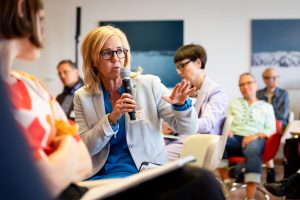
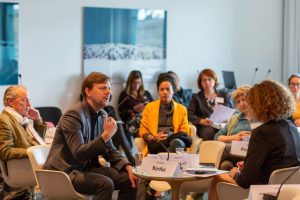
In a first step, the project "Participatory Development Strategy for Lusatia" (funded by the German Federal Ministry for the Environment, Nature Conservation and Nuclear Safety) discussed which participation formats for shaping the transformation in Lusatia can create trust through participation and how culture and identity can be mapped in structural change processes. During the nine-month project phase, a trialogue and two workshops were held with stakeholders from politics & administration, business, organized civil society, science and cultural practitioners from Lusatia. The final report "Change with Structure" can be found here.
The role of municipal citizen participation
In a further step, the project "Municipal Citizen Participation in Lusatia" examined municipal participation formats that have already taken place and systematized and visualized possible formats. Because participation is not just participation. It must not be a fig leaf for measures that have already been decided upon, nor should it raise unfulfillable expectations. How have previous participation formats been received by citizens? What role does long-term municipal participation play, for example, in the creation of mission statements and visions? How do municipal processes and higher-level structures of the transformation process interact? How can the various levels be reconciled? These and other questions were explored in an interview-based study.
01/2019 - 12/2021
Federal Ministry for the Environment, Nature Conservation and Nuclear Safety
Katja Treichel, Prof. Dr. Gesine Schwan, Raffael Barth
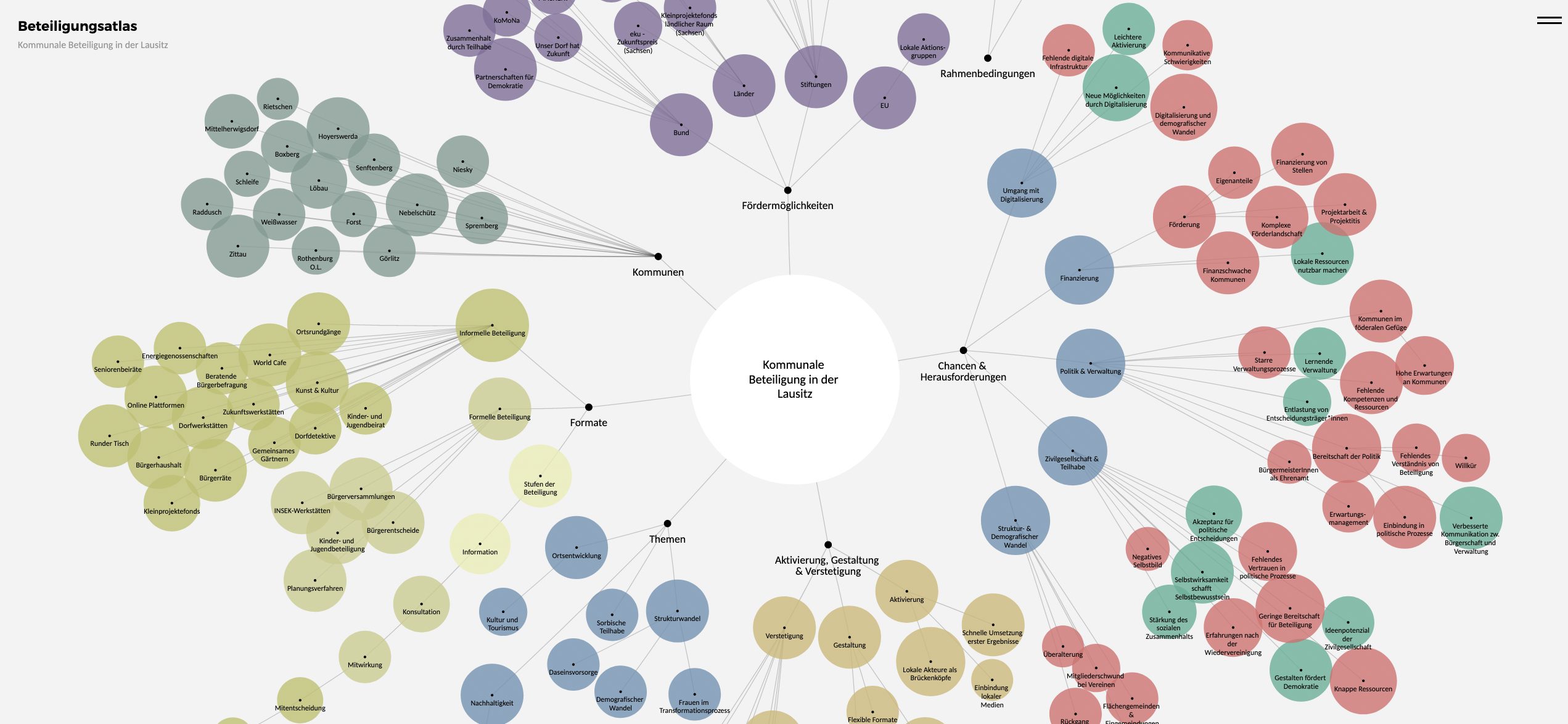
The results of the study were visualized in a participation atlas that is freely accessible in digital form. This can be accessed via the following link: https://viz.governance-platform.org/beteiligungsatlas-lausitz/