Participatory development in Lusatia

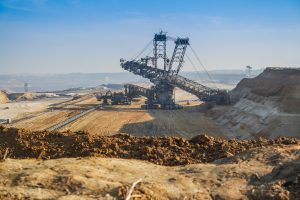
The coal phase-out is linked to the need to make our society and our economy more climate- and resource-friendly. Surveys show that a large part of the population supports climate policy goals. But when it comes to concrete implementation, individual measures are often perceived as unfair, too expensive or too elitist. How can citizens succeed in supporting this far-reaching transformation process in concrete terms - especially in particularly affected regions such as Lusatia?

To this end, the Berlin Governance Platform is looking at the opportunities and challenges of participation formats, especially in municipalities that are strongly affected by transformation processes, as is the case in Lusatia. Increasing acceptance of the changes taking place on the ground cannot be achieved through financial support alone, but also relies on citizens being able to shape the transformation themselves. To do this, they must be able to participate in the decision-making process, contribute their own ideas and feel their impact. At the same time, this is an opportunity to overcome the currently deeply rooted skepticism of citizens toward "politics," including democracy, because it allows them to build on new, reliable experiences of their own.

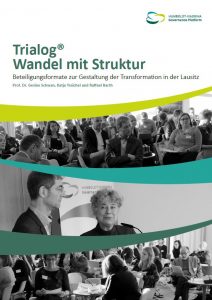
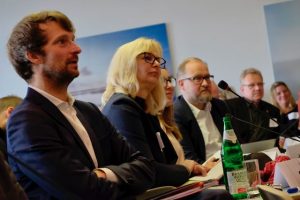
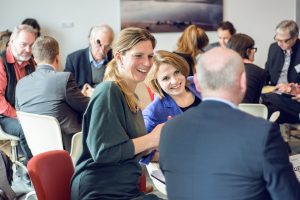
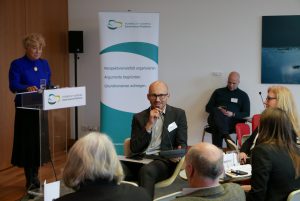
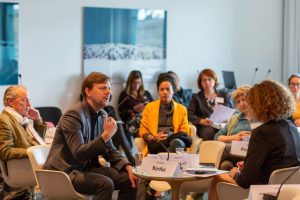
In a first step, the project "Participatory Development Strategy for Lusatia" (funded by the German Federal Ministry for the Environment, Nature Conservation and Nuclear Safety) discussed which participation formats for shaping the transformation in Lusatia can create trust through participation and how culture and identity can be mapped in structural change processes. During the nine-month project phase, a trialogue and two workshops were held with stakeholders from politics & administration, business, organized civil society, science and cultural practitioners from Lusatia. The final report "Change with Structure" can be found here.

The role of municipal citizen participation

In a further step, the project "Municipal Citizen Participation in Lusatia" examined municipal participation formats that have already taken place and systematized and visualized possible formats. Because participation is not just participation. It must not be a fig leaf for measures that have already been decided upon, nor should it raise unfulfillable expectations. How have previous participation formats been received by citizens? What role does long-term municipal participation play, for example, in the creation of mission statements and visions? How do municipal processes and higher-level structures of the transformation process interact? How can the various levels be reconciled? These and other questions were explored in an interview-based study.

DURATION

01/2019 - 12/2021

FUNDER

Federal Ministry for the Environment, Nature Conservation and Nuclear Safety

TEAM

Katja Treichel, Prof. Dr. Gesine Schwan, Raffael Barth

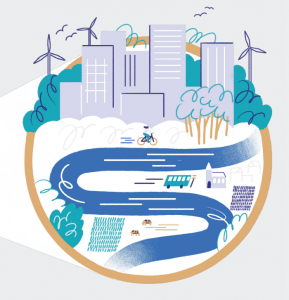
Visualization on municipal participation in Lusatia

The results of the study were visualized in a participation atlas that is freely accessible in digital form. This can be accessed via the following link: https://viz.governance-platform.org/beteiligungsatlas-lausitz/
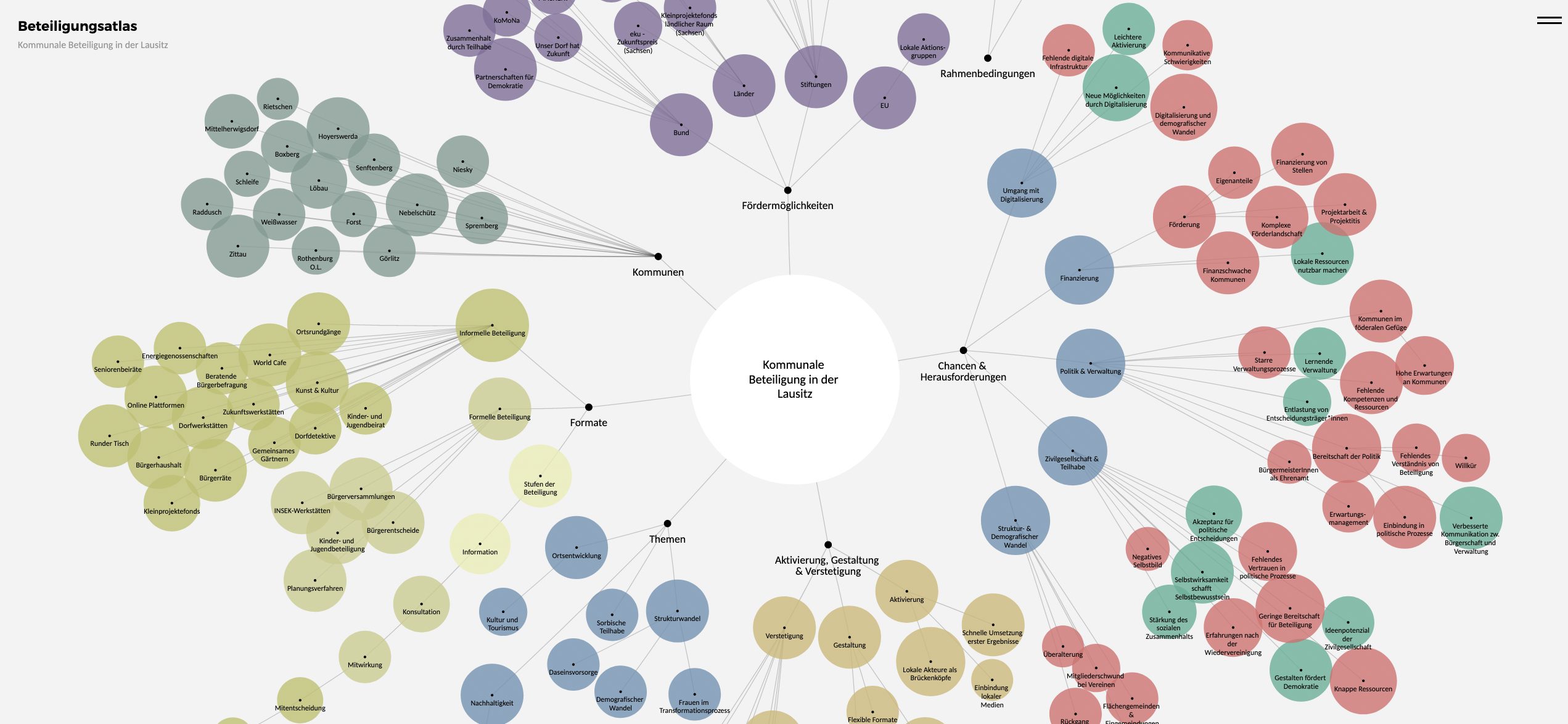
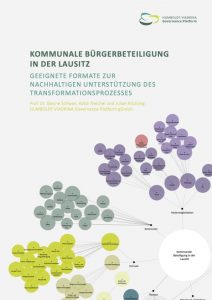
Inclusion of the Participation Atlas Municipal Participation in Lusatia

Publications

More projects

  • Trialog zur Reform der Erbschaftssteuer

    In einer mehrteiligen Dialogreihe bringen wir unterschiedliche gesellschaftliche Perspektiven zusammen, um Reformoptionen für die Erbschaftsteuer zu beraten und zukunftsweisende Empfehlungen für die Bundesregierung zu entwickeln.
  • Energiewende Partnerstadt 3.0

    Ziel des Projekts „Energiewende Partnerstadt 3.0“ ist es, über Ländergrenzen hinaus Know-how und Erfahrungen zur lokalen Energiewende auszutauschen, den Technologietransfer im Bereich Erneuerbare Energien zu erleichtern und den Zusammenhalt in […]
  • Offering refugees a home in Berlin

    How can refugees find adequate and affordable housing in Berlin? In the midst of a tight housing market and numerous barriers to access, we are developing ideas for possible solutions with policymakers, civil society and the real estate industry.
  • Photo of participants of the trialogue "Nutrition, Health and Social Cohesion

    Trialogue Series Social Cohesion

    As part of BUA's "Grand Challenge Social Cohesion" initiative, the three-part trialogue series "Social Cohesion" was held in late summer and fall 2022. The focus was on the transdisciplinary exchange of 6 Exploration Projects [...]
  • Research Atlas "Social Cohesion" in cooperation with BUA

    Research Atlas "Social Cohesion

    The interactive research atlas "Social Cohesion" visualizes the current research activities on the topic of social cohesion in the Berlin research area.  
  • Participatory development in Lusatia

    The coal phase-out is linked to the need to make our society and our economy more climate- and resource-friendly. Surveys show that a large part of the population supports these climate policy goals. But if [...]
  • Multi-stakeholder housing conversations.

    In a series of talks on social housing in cities (2019 and 2020), representatives of politics and administration, business and organized civil society were brought together to discuss current challenges in the field of housing [...]
  • Trialogue series Future of Democracy

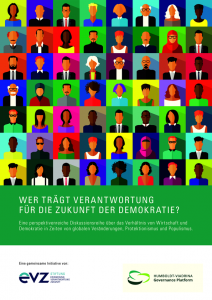
    "Who bears responsibility for the future of democracy? – A perspective-rich discussion series on the relationship between business and democracy in times of global change, protectionism and populism." - a joint [...]
  • Guidelines for participation in the housing construction of the state-owned

    In 2017, the Berlin Governance Platform, in cooperation with the state-owned housing associations, conducted a series of trialogues on the topic of "Participation in Housing" in order to discuss these challenges of the growing city in a community-oriented manner and [...]
  • Trialog Series: German Special Path?

    On behalf of the Senate Department for Urban Development and Housing and the District Office Mitte of Berlin, we implement digital citizen participation: The project "Voices at the Push of a Button" collects ideas via voice messages for the [...]
  • The working time dialog in trialog format

    Against the background of technological innovations as well as demographic and cultural changes, which are accompanied by new demands on the organization of work, ways of designing an innovative working time policy will be discussed.
  • The logo of the Berlin Governance Platform in three colors as favicon. We work as a non-profit society in the service of promoting good governance, developing projects and concepts. We create spaces for all those who want to help shape a just and sustainable future.

    Trialogues on the compatibility of family and career as partners

    Trialogue on the topics of work (time) culture and equality with the Federal Ministry for Family Affairs, Senior Citizens, Women and Youth.
  • Voices at the touch of a button: citizen participation via voice messages

    On behalf of the Senate Department for Urban Development and Housing and the District Office Mitte of Berlin, we implement digital citizen participation: The project "Voices at the Push of a Button" collects ideas via voice messages for the [...]
  • Trialogue Series "Energy Systems of the Future" (ESYS)

    In cooperation with the Academies Project "Energy Systems of the Future", the Berlin Governance Platform conducts trialogues as sounding boards for the working groups of the Academies Project.
  • Trialogue "Science Platform Sustainability 2030

    The Berlin Governance Platform, in cooperation with the Mobility Working Group of the Science Platform Sustainability 2030, conducted the trialogue "Sustainably on the Move – Making Mobility Attractive Now".
  • Energy Transition PartnerCity - Sharing Municipal Knowledge Europe-wide

    The aim of the "Energiewende PartnerStadt" project was to exchange know-how and experience on local energy transition across national borders, to facilitate technology transfer in the field of renewable energies and to promote cohesion in Europe [...]
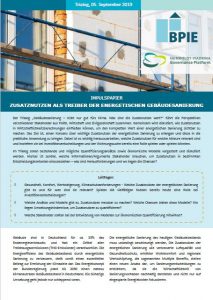
  • Added value as a driver of energy-efficient building refurbishment

    The project "Additional benefits as drivers of energy-efficient building refurbishment" aimed to clarify the societal debate on the multiple benefits of energy-efficient refurbishment.
  • International exchange Berlin-Minsk

    The bilateral project "Cities for Citizens" brings together German and Belarusian experts from politics & administration, business and organized civil society in the Trialogue ®, in order to integrate their accumulated knowledge into the current [...]
  • New Urban Agenda Berlin

    Within the two years of the project (2018 to 2020), the TU Berlin, in cooperation with the Berlin Governance Platform, organized four trialogues and four trialogical project groups on the urban policy challenges of mobility, immigration, housing [...]
  • EnVision

    The project "EnVision – Shaping a Vision for the Energy Transition" identifies areas of tension and value-conflicts in the energy transition, and develops proposals for political decision-makers to develop a common vision.