2023 was the year of the first global stocktake on the implementation of the Paris Climate Agreement (Global Stocktake). Given the increasing risk of exceeding the 1.5°C threshold, all countries had to increase their ambitions to effectively reduce their emissions, taking into account their respective levels of development. Due to its high share of emissions in many countries, the transport sector was one of the most important sectors for decarbonization. Ambition and implementation had to go hand in hand: ambitious targets alone were not enough – corresponding policy measures also had to be implemented in order to keep the targets set for 2023 achievable. While numerous instruments were available to assess the ambition of national targets and the underlying policy measures, assessments were helpful for the Global Stocktake and the evaluation of the implementation progress, providing a concise, comprehensive and comparable overview of the state of implementation.
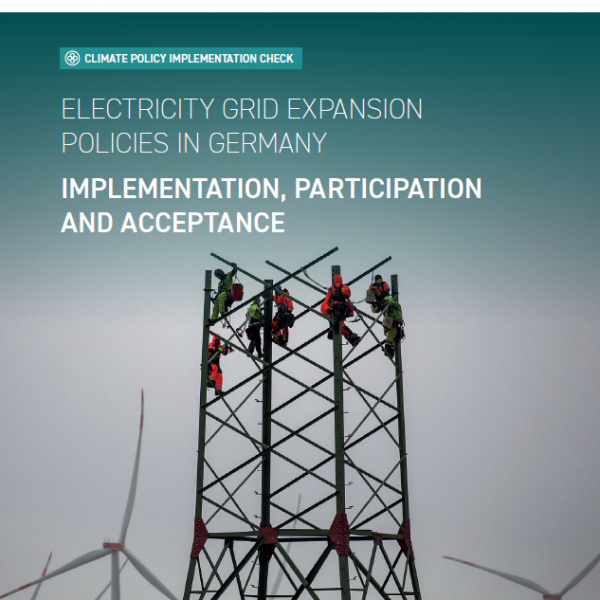
The Berlin Governance Platform, together with Climate Analytics that International Secretariat of Climate Transparency. Climate Transparency is a partnership of think tanks and civil society organizations from G20 countries with the goal of advancing the implementation of climate policies through greater transparency. The new instrument of Climate Transparency, the Climate Policy Implementation Check, It was developed to assess, categorize, and monitor the implementation status of measures.
The goal of the project was to promote the exchange of information and experiences on the implementation of emission reduction measures in the transport sector between the European Union (EU) and Argentina, Brazil, Colombia, and Mexico. This was done in two steps: First, ambitious measures to decarbonize the transport sector in the aforementioned countries were evaluated using the Climate Policy Implementation Check based on four categories: legal status, institutions and governance, resources, and monitoring and control. Subsequently, representatives from civil society and government came together in a joint workshop to exchange the evaluations, gain insights, and develop recommendations for the future course of action.
This activity was part of the European Union Climate Dialogues (EUCDs) project.
01/2023 – 08/2023
Florian Mersmann
Sebastian Wegner
Zeina Abbas