Impact Cities

Impact Cities ist ein Projektkonsortium aus den solidarischen europäischen Städten Berlin, Villeurbanne, Lyon, München, Athen, Utrecht und Zagreb, dem französischen Städtebündnis ANVITA, dem zivilgesellschaftlichen Netzwerk From the Sea to the City und den NGOs Berlin Governance Platform und Inter Alia. Wie bereits das Vorgängerprojekt Cities4Refugees verfolgt auch das zweijährige Projekt Impact Cities das Ziel, eine strategische Vernetzung, Best- Practice Austausch und Zusammenarbeit von europäischen Kommunen und Zivilgesellschaft im Bereich der EU-Migrations- und Integrationspolitik zu ermöglichen.

"Impact Cities“ startete im April 2026 und sieht eine Reihe von analogen und digitalen Events über einen Zeitraum von insgesamt 12 Monaten vor. Das Projekt stärkt die Rolle von Kommunen und zivilgesellschaftlichen Organisationen in der europäischen Migrations- und Asylpolitik und stellt dabei die Weiterentwicklung des 2021 gegründeten Städtenetzwerks International Alliance of Safe Harbours (IASH) in den Mittelpunkt: neue Kommunen sollen dazugewonnen werden, der Wissensaustausch zwischen Kommunen und Zivilgesellschaft wird ausgebaut und die politische Arbeit des Netzwerks gestärkt. Darüber hinaus wird die enge Partnerschaft mit dem zivilgesellschaftlichen Netzwerk From the Sea to the City (FS2C) fortgeführt. Durch Workshops, Vor-Ort-Besuche und Politikdialoge begleitet das Projekt Kommunen dabei, die Umsetzung des reformierten Gemeinsamen Europäischen Asylsystems (GEAS) aktiv mitzugestalten – für bessere Aufnahmebedingungen, starke Integrationsangebote und eine gut hörbare kommunale Stimme in der europäischen Flucht- und Migrationspolitik.

As part of the project consortium, the Berlin Governance Platform is responsible for both organising the event and providing strategic advice to the municipal partners.

Subscribe in the BGP newsletter on the subject of migration, to receive news about the planned events.
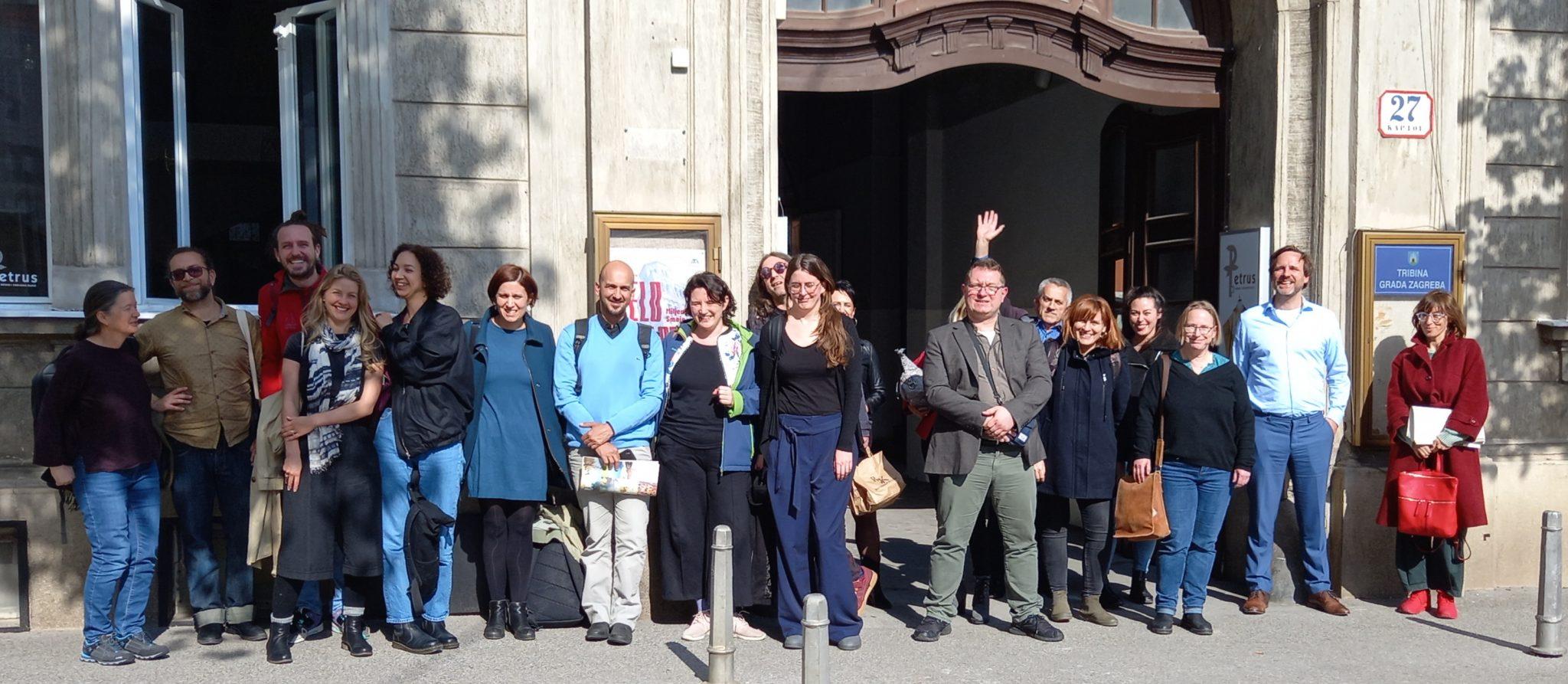
A photo of the participants of a Cities4Refugees conference in Zagreb 2023. In order to promote networking & cooperation in the field of EU migration policy, cities & NGOs with CERV funding have joined forces as Cities4Refugees.

ACTIVITIES

  1. Kick-Off-Meeting: GEAS-Auswirkungen auf Städte in EU-Ländern mit Außengrenze

    Zum Auftakt des Projekts trafen sich die Impact Cities-Partner:innen für zwei Tage in Athen mit griechischen Kommunal- und Zivilgesellschaftsakteur*innen, um die Auswirkungen des EU-Pakts insbesondere auf Kommunen in Nähe zur EU-Außengrenze zu diskutieren. In den Panels ging es um Spannungen zwischen zentralisierter und nationaler Migrationssteuerung und lokaler Integrationsarbeit, gute kommunale Praxisbeispiele sowie die zunehmende Kriminalisierung der solidarischen Zivilgesellschaft. 

    Host: Inter Alia

  2. Digitales öffentliches Auftakttreffen: Städte und Zivilgesellschaft in der GEAS-Umsetzung

    Die GEAS Reform ist am 12.6.2026 offiziell in Kraft getreten. Jetzt gilt es, sich gemeinsam auf ihre Auswirkungen vorzubereiten. Gemeinsam mit Charlotte Labrosse (ECRE), Anna Gruber (Collective Aid) und Niels Tubbing (Stadt Amsterdam) haben wir diskutiert, welche Warnsignale jetzt schon sichtbar werden, über welche Instrumente wir für ein effektives Monitoring verfügen, und wie Städte und Zivilgesellschaft sich jetzt gemeinsam für geflüchtete Menschen engagieren können. 

    Host: Berlin Governance Platform & Inter Alia

  3. Vor-Ort-Besuch in Zagreb: Kommunale Ansätze in einem Transitland
  4. Webinar: Best-Practice-Austausch zur Unterstützung von Personen ohne Aufenthaltsstatus
  5. Vor-Ort-Besuch in Lyon/Villeurbanne und Peer-Austausch: Kommunale Best Practices
  6. Webinar: Aus Erfahrungen lernen – Erschließung von EU-Fördermitteln für lokale Migrationsarbeit
  7. Konferenz: Städte und der Solidaritätsmechanismus – Monitoring von Relocations und finanziellen Beiträgen
  8. Webinar: Die Rolle der Städte in der Umsetzung des EU-Solidaritätsmechanismus
  9. Austausch- und Engagement-Mission nach Brüssel: Die Auswirkungen des Pakts und der Solidaritätszusagen
  10. Abschlusskonferenz: Höchstmögliche Standards in der GEAS-Umsetzung wahren
DURATION04/2026 - 03/2028
FUNDEREuropean Union, CERV programme
WEBSITE

tba

TEAM & CONTACT

Lea Rau

PARTNER

  • City of Berlin - Senate Department for Labour, Social Affairs, Equality, Integration, Diversity and Anti-DiscriminationGermany
  • Stadt Utrecht, Niederlande
  • City of Zagreb, Croatia
  • From the Sea to the City, order to Europe-wide
  • Inter Alia, Griechenland
  • ANVITA, France
  • Stadt München, Germany
  • Stadt Athen, Griechenland
  • Stadt Villeurbanne, France
  • Stadt Lyon, France

Similar projects

  • Impact Cities

    Impact Cities ist ein Projektkonsortium aus den solidarischen europäischen Städten Berlin, Villeurbanne, Lyon, München, Athen, Utrecht und Zagreb, dem französischen Städtebündnis ANVITA, dem zivilgesellschaftlichen Netzwerk From the Sea to the […]
  • Logo and a municipality from the Berlin Governance Platform's Re:Match pilot project in four colours. The individual pieces of the symbol match with the others to create a matching whole.

    Re:MatchJob

    Re:MatchJob is dedicated to the further development of data-based matching of protection seekers and cities for participatory relocation and successful labour market integration through the focused development of matching criteria and processes that should help to [...].
  • Logo of the Berlin Governance Platform's Re:Match pilot project in four colours. The individual pieces of the symbol match with the others to create a matching whole.

    Re:Match

    Re:Match is piloting data-based matching of people seeking protection and cities for participatory relocation. The needs-based and individualised matching with the help of an algorithm in municipalities ready to receive refugees is an innovative solution for a human rights-based [...].
  • Accommodation for refugees in Berlin

    How can refugees find adequate and affordable housing in Berlin? In the midst of a tight housing market and numerous barriers to access, we are developing ideas for possible solutions with policymakers, civil society and the real estate industry.
  • CERV project Cities4Refugees

    Cities4Refugees

    Cities4Refugees is a project consortium consisting of the European cities of Berlin, Villeurbanne and Zagreb, as well as the NGOs Berlin Governance Platform, BBAG and Studio Rizoma. The two-year project aims to develop a strategic [...]
  • From the Sea to the City

    From The Sea To The City (FSTC) is a European civil society network consisting of several NGOs and grassroots political initiatives. Together, we campaign in the European public sphere with the help of innovative [...]
  • Photo of participants in the trialogue "Nutrition, health and social cohesion"

    Trialogue series Social Cohesion

    As part of BUA's "Grand Challenge Social Cohesion" initiative, the three- part trialogue series "Social Cohesion" was held in late summer and fall 2022. The focus was on the transdisciplinary exchange of 6 Exploration Projects [...]
  • This header image shows a symbol for networking in the colours of the Berlin Governance Platform over a picture of a municipality. The project for this is in the area of migration and is called Networks for a Welcoming Europe.

    Networks for a Welcoming Europe

    In a map, actors and networks in the field of migration in Europe were identified and networked, and strategic partnerships were established.
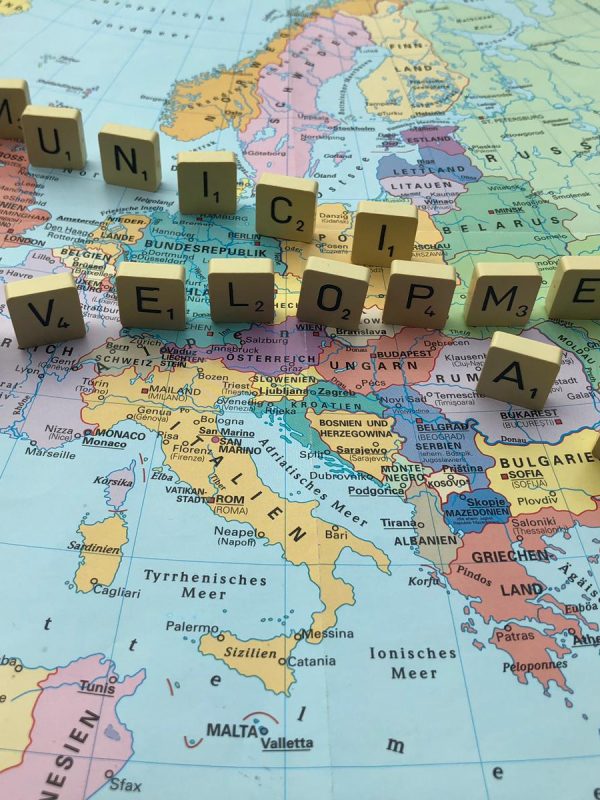
  • On a map of Europe, tokens are placed on which "Municipal Development" can be read. The Berlin Governance Platform's Municipal Integration and Development Initiative in the Migration Sector project has developed several concepts and projects in this area.

    Municipal integration and development initiative

    The Municipal Integration and Development Initiative (MIDI) starts at the local level and develops governance concepts in which municipalities play a central role. A joint, participatory organisation of municipal development [...]
  • The European Integration and Development Fund

    Municipalities that agree to take in people seeking protection should be incentivised financially. To this end, we propose the establishment of an EU fund to which municipalities can apply directly for financial resources [...]