The heating transition is one of the key challenges on the path to climate neutrality. Its success depends not only on technical solutions, but also on whether we can successfully reconcile differing local interests and bring about viable political decisions.
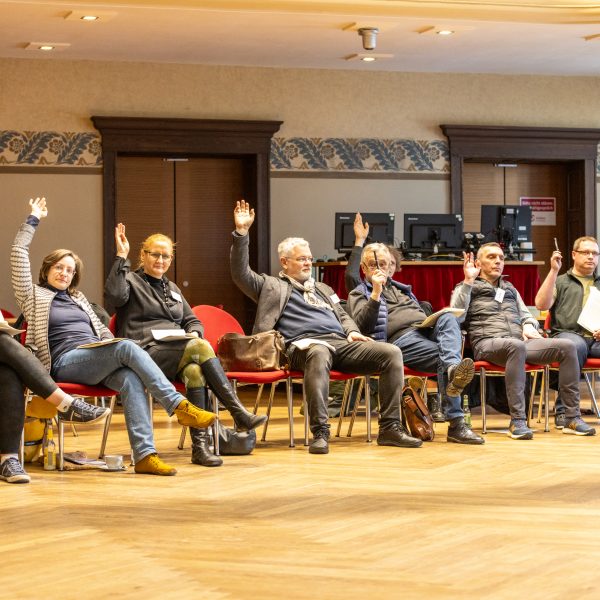
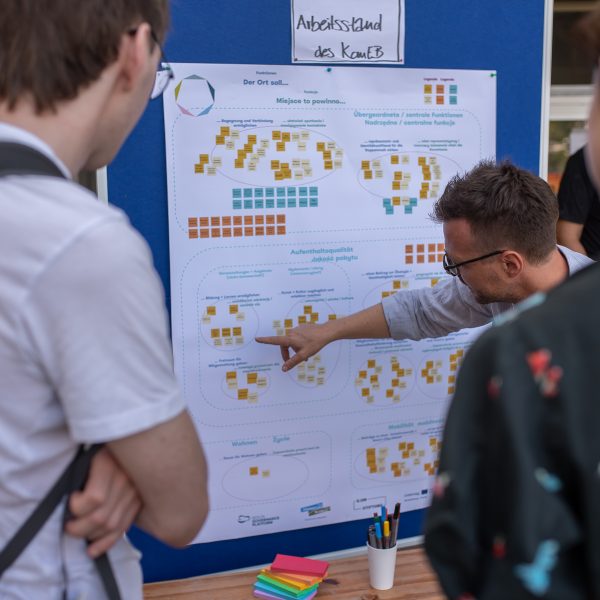
Through the „Municipal Development Councils in the Heat Transition“ project, we are supporting four German local authorities in shaping the heat transition in a participatory manner. The focus is on Municipal Development Councils, our participatory and conflict-resolution framework for local authorities.Through this initiative, we bring together stakeholders from the business sector and civil society with local politicians and administrators around one table. In a facilitated process, different perspectives are brought together, conflicts are actively addressed and recommendations for the local heating transition are developed jointly.
The aim is to develop solutions that are not only technically sound, but also relevant to the local context and enjoy broad public support. After all, involving the local community at an early stage builds trust, increases acceptance of necessary changes and improves the conditions for successful implementation.
The participating local authorities benefit from our experience in designing complex participatory processes, expert support throughout the process, and the opportunity to exchange ideas within a nationwide network.
10/2025 – 04/2027



Bremerhaven has a population of around 115,000 inhabitants and is gradually implementing its municipal heating plan. A central building block is the establishment of district-based renovation management, which is intended to support property owners and other stakeholders in energy-efficient renovations and the switch to climate-friendly heating systems. Given the comparatively high proportion of lower-income households in the city, it is also essential to ensure that this transformation process is carried out in a socially responsible manner.
The Municipal Development Advisory Board supports the implementation of the heating plan, placing a particular focus on the development and design of the renovation management. Together with stakeholders from the housing sector, the energy sector, the skilled trades, public administration and civil society, he is drawing up recommendations on how the heating transition can be implemented in neighbourhoods in a sustainable and socially equitable manner.

In Hanau, too, the Municipal Development Advisory Board is overseeing the implementation of the municipal heating plan. The heating plan is due to be adopted in the autumn and will form the basis for further joint work. The specific focus of the Advisory Board will be developed and defined in advance by a planning group.
With a population of around 175,000, Oldenburg is the regional centre of north-western Lower Saxony. The city’s aim is to become climate-neutral by 2035. A key element of this is the heating transition. Unlike in many large cities, heat supply in Oldenburg is currently provided predominantly on a decentralised basis via individual buildings; there is no city-wide heating network. The local authority’s heating plan therefore indicates that, in future too, decentralised solutions such as heat pumps and smaller neighbourhood-based solutions will continue to dominate the heat supply.
Against this background, the Municipal Development Advisory Board is supporting the implementation of the municipal heating plan. He develops recommendations on how the heating transition in Oldenburg can be designed to be socially just, economically viable, and in collaboration with the relevant stakeholders. The focus is on issues relating to social acceptability, suitable financing and operating models, engaging and supporting key stakeholders, and the long-term support and further development of the local heating transition.
In Radevormwald, the Municipal Development Advisory Board supports the statutory process of municipal heat planning. The specific focus of the work is developed and defined jointly by a preparatory planning group at the start of the process.