Dialogue series on inheritance tax reform

From blockade to understanding

Germany faces fundamental distribution questions that go far beyond tax law. The trialogue series on inheritance tax reform therefore brings together high-ranking representatives from politics, business, civil society, and academia. This is not only about developing guidelines for a viable reform, but also about showing innovative ways of democratic understanding. 

With the expected at the end of this year Federal Constitutional Court ruling on inheritance tax a political window of opportunity is opening. The question, therefore, is not whether inheritance tax will be reformed. The question is whether common benchmarks can be developed beforehand for what constitutes a fair, economically viable, and public-interest-oriented reform.  

The Trialog series sees itself in this context as Contribution to the reform capacity of our democracy in times of increasing polarisation. The central question, therefore, is one of democratic policy: how can democracies remain capable of acting and reforming, even in cases of highly controversial issues? Inheritance tax, in particular, touches upon core questions of achievement, ownership, equality of opportunity, entrepreneurship, family businesses, and social cohesion. Consequently, positions often harden early on, making it increasingly difficult to discuss such issues beyond polarisation, partisan reflexes, and public dramatisation.  

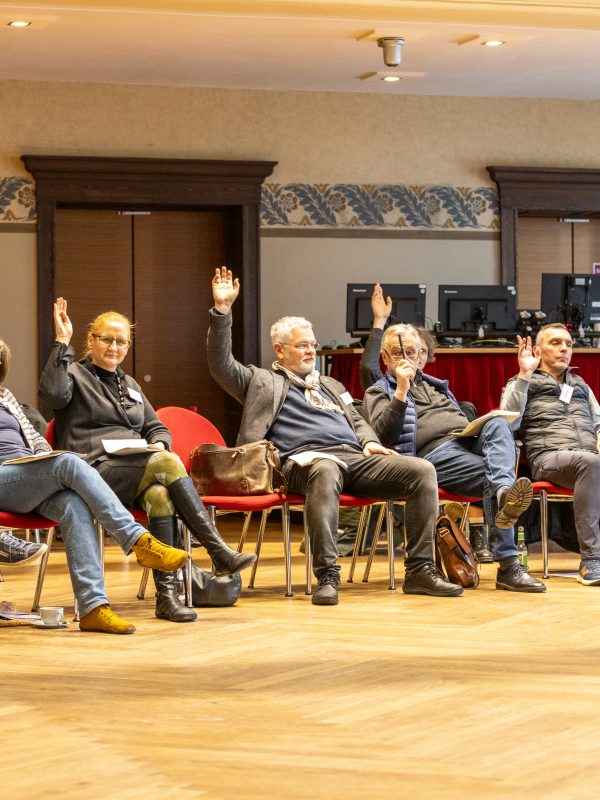
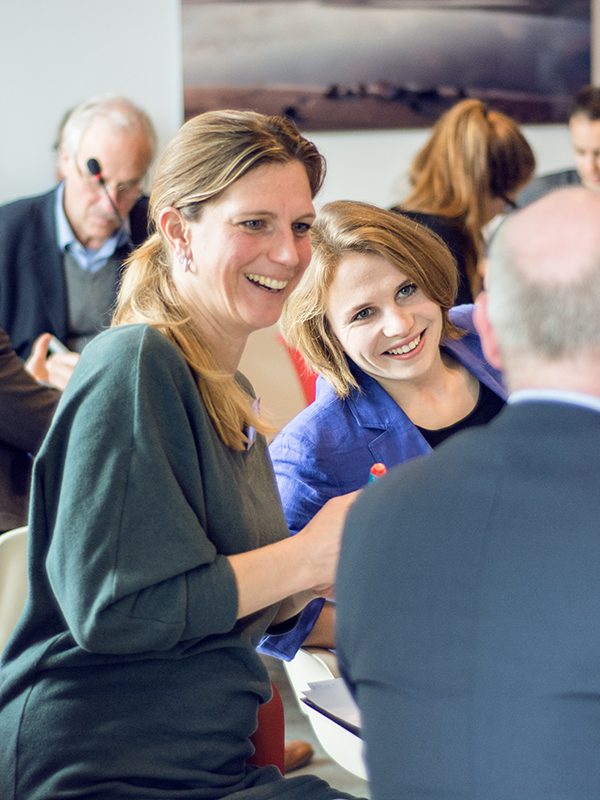
This is where the Trialogue series begins: It should show that agreement is possible even on controversial distribution issues, when different stakeholders are willing to contribute their perspectives, listen, and jointly seek solutions that serve the common good. In this protected space, we therefore bring together around 50 personalities from politics and administration, business, organised civil society, and academia to talk with each other rather than about each other.  

DURATION

07/2026 – 03/2027

PROMOTING

Private donors

CONTACT
FORMAT

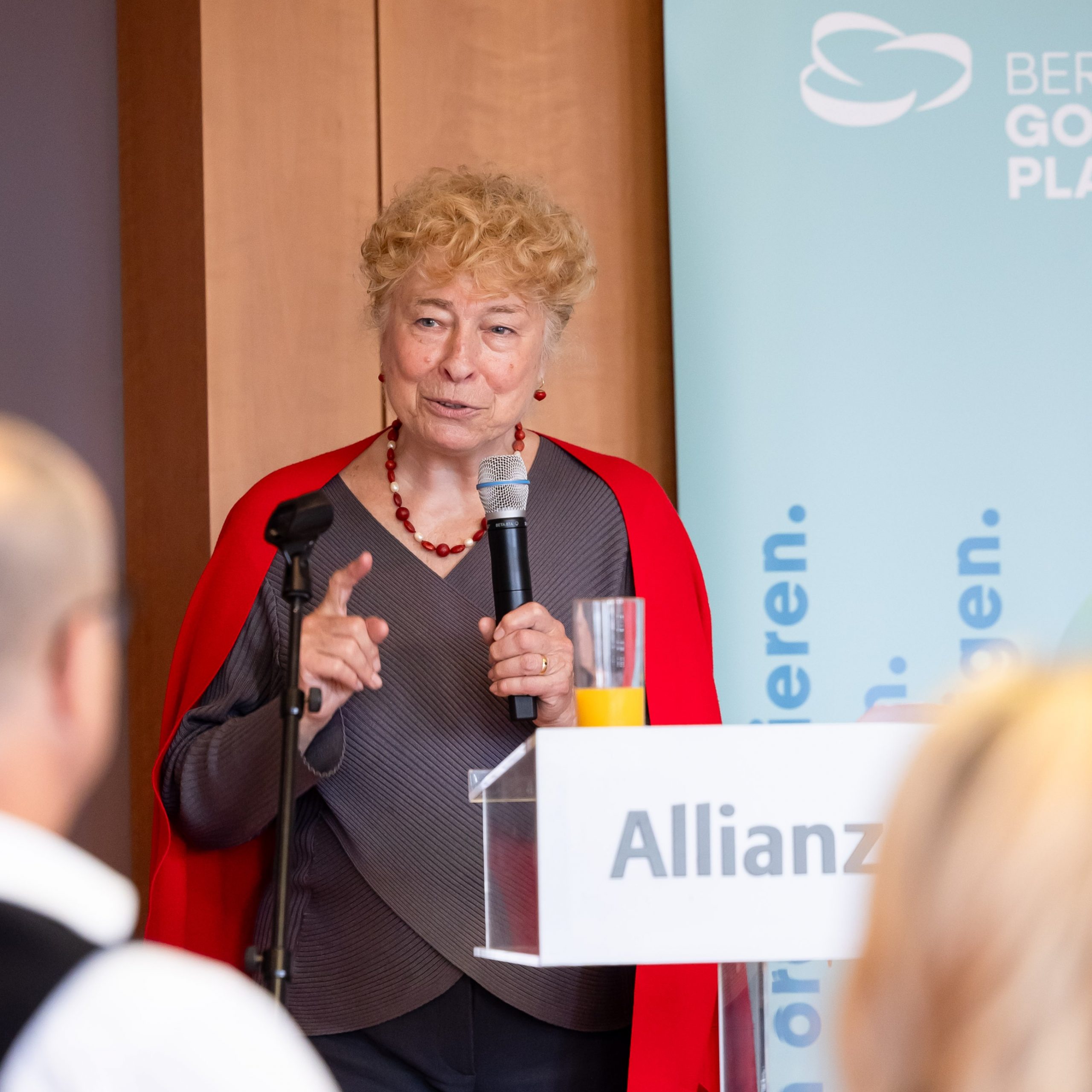
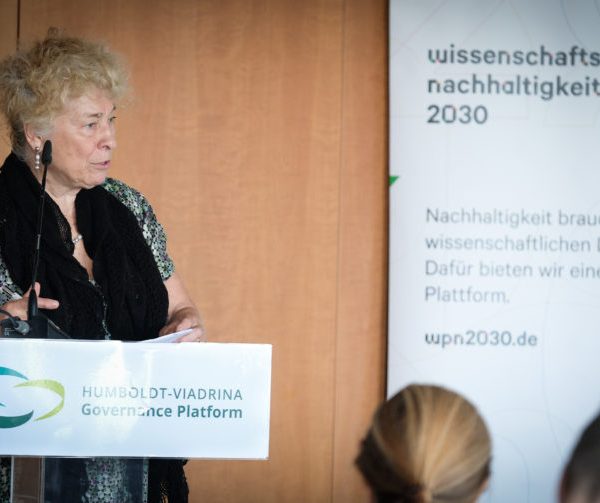
»A democracy remains capable of reform only when people with different interests and backgrounds come together, listen to one another, and find solutions for complex problems that are oriented towards the common good.«

Prof. Dr. Gesine Schwan

Co-founder & Management

Aim and effect of the tax dialogue

Over the course of four sessions, common criteria, guidelines, and benchmarks will be developed for a reform that is legally sound, economically viable, and socially acceptable. At the end of the process, there will be a joint declaration, which will be introduced into the political and public debate and will provide orientation for the upcoming reform decisions.  

The unique aspect of the format is that we create a space for openness, learning, and finding solutions for the common good, which is otherwise rarely available. Even in highly polarised debates, this leads to corridors of understanding and recommendations that often remain invisible through the usual political and public channels. In this way, we also strengthen trust in democracy's ability to find solutions. 
Important Questions and Answers on the Tax Dialogue

Warum wird der Steuer-Trialog gerade jetzt initiiert?

Germany faces a new debate about the future of inheritance tax. The expected Federal Constitutional Court ruling creates additional pressure for reform. At the same time, it shows how difficult it has become to have a constructive discussion about issues of ownership, performance, entrepreneurship, equality of opportunity, and the common good. The tax dialogue is intended to create a space where different perspectives can come together to form a basic consensus before a parliamentary procedure begins. 

Der Trialog unterscheidet sich von einer Konferenz oder Anhörung durch folgende Punkte: * **Zusammensetzung:** Ein Trialog beinhaltet typischerweise drei Haupt

The triologue is not a format for merely presenting positions. Participants work together on central conflict issues over several months, by justifying their positions and drawing connectable, „generalisable“ (Habermas) conclusions. The aim is to reach an understanding on criteria and scope for solutions, not the public defence of pre-existing positions. 
How does the trialogue differ from an expert commission?

The Trialog is not an expert commission, but a process of communication between actors from politics, business, academia and civil society. Its goal is not primarily the technically best solution, but the development of common orientations for political action.

Expert committees rely on specialist knowledge, scientific evidence and technical expertise. They answer the question: „From a technical perspective, what is the best solution?“ The trialogue poses the further question: „Which solution can be considered just, viable and oriented towards the common good in a pluralistic society?“ It is based on the insight that political decisions cannot be derived from expert knowledge alone. They also concern different values, interests, experiences and notions of justice. Therefore, in addition to scientific understanding, social dialogue is needed.

The trialog brings together people who can evaluate the same facts differently. It makes these differences visible and searches for common standards for the common good. One could also say: Expert commissions look for evidence-based recommendations, the trialog for political truth. – therefore according to an orientation that can be recognised by various social groups as legitimate and viable. This does not come about through voting on facts, but through the respectful exchange of different perspectives.

The trialogue neither replaces scientific expertise nor democratic decision-making procedures. It complements them through a structured process of mutual understanding.

In short: An expert commission pools specialist knowledge. The trialogue combines specialist knowledge with political, economic and societal perspectives to enable a shared orientation for democratic action.

Why is the trialogue taking place under the Chatham House Rule?

The trialogue should create a space where uncertainties, conflicting goals, and potential options for agreement can also be openly addressed. Therefore, contributions may not be attributed to individual persons. The essential arguments, lines of conflict, and results will be published, not statements that can be individually assigned. 

What are the results of the trialogue?

The trialogue does not result in a draft law and does not make political prior decisions. Instead, the aim is to develop a jointly supported recommendation that formulates criteria, guidelines, and orientations for a future reform of inheritance tax. This recommendation is intended to highlight which principles different societal actors jointly consider important, where understanding has been achieved, and what conflicting objectives consist should remain and lead to compromises, and by what standards a future reform should be measured. 

The trialogue is democratically relevant because:

The tax trialogue does not merely address the question of what a reform of inheritance tax might look like. It simultaneously explores a new way democratic societies can deal with fundamental conflicts of interest: through understanding rather than polarisation, through reasoned exchange rather than mutual attribution, and through the joint search for viable guiding principles. In this sense, the trialogue is also a contribution to democratic capacity for reform in a time of growing social tensions. 

Similar projects

  • Dialogue series on inheritance tax reform

    In a multi-part dialogue series, we are bringing together different societal perspectives to discuss reform options for inheritance tax and to develop future-oriented recommendations for the federal government.
  • Municipal Development Councils in the heat transition

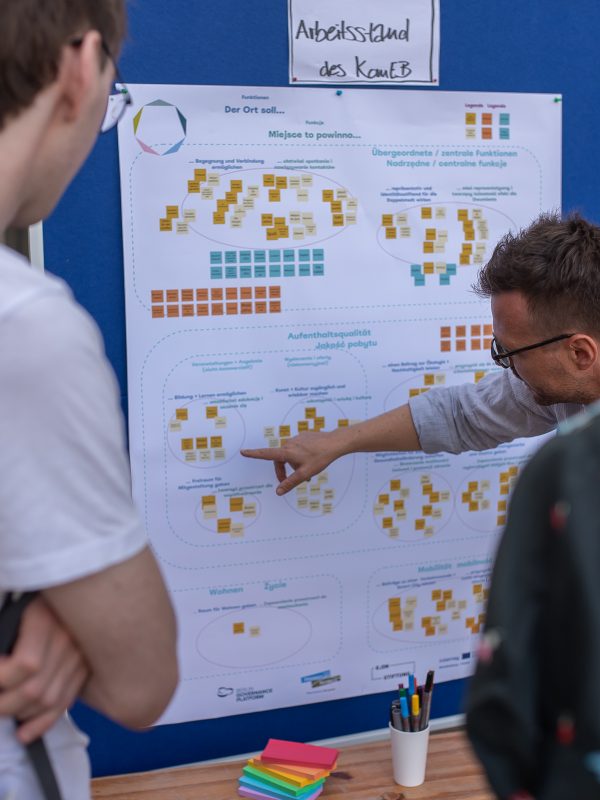
    Over the course of a year, we work alongside selected local authorities to help them develop practical, broadly supported strategies for the local heating transition within local development advisory boards.
  • Municipal Development Council in Cottbus/Chóśebuz

    There is a prominent brownfield site in the centre of Cottbus that was recently acquired by the city. A municipal development advisory board brings together various stakeholders to make recommendations for the future use of this [...]
  • Municipal Development Council in Frankfurt (Oder)

    A municipal development advisory board developed a model for the development of an open space directly adjacent to the city bridge connecting Frankfurt (Oder) and Słubice.
  • Energy transition twin city 3.0

    The aim of the "Energiewende PartnerStadt" project was to exchange expertise and experience on the local energy transition across national borders, facilitate technology transfer in the field of renewable energies and promote cohesion in Europe.
  • Municipal Development Council in Duisburg

    Duisburg-Hochfeld, once characterised by heavy industry, is a prototype for areas in the Ruhr region affected by structural change. A municipal development advisory board is discussing ways to improve the quality of life for residents in the neighbourhood [...].
  • Municipal Development Council in Samtgemeinde Meinersen

    A municipal development council plays a key role in shaping climate protection measures in the Meinersen joint municipality in Lower Saxony. The aim of this participation framework is to make the development process transparent, to ensure the legitimacy of the [...]
  • Offering refugees a home in Berlin

    How can refugees find adequate and affordable housing in Berlin? In the midst of a tight housing market and numerous barriers to access, we are developing ideas for possible solutions with policymakers, civil society and the real estate industry.
  • A municipal development advisory board accompanies urban development in Weißwasser/O.L.

    Municipal Development Council in Weißwasser/O.L.

    The city of Weißwasser is facing major changes over the next few years: the centralised supply of lignite will come to an end from 2029. A municipal development council is currently discussing how [...]
  • In Hoyerswerda, a municipal development advisory board advises on the utilisation of green spaces and demolition sites

    Municipal Development Council in Hoyerswerda

    In Hoyerswerda, a municipal development council is discussing the utilisation of urban green spaces and demolition sites. The aim is to create a "green fringe".
  • A municipal development advisory board supports the municipality of Kalletal

    Municipal Development Council in Kalletal

    In Kalletal, a municipal development advisory board drew up recommendations for improving municipal healthcare provision.
  • In Niesky, a municipal development advisory board is discussing the town's economic future.

    Municipal Development Council in Niesky

    In Niesky, a municipal development council discussed the economic future of the town.
  • A municipal development advisory board accompanies urban development in Rottenburg am Neckar

    Municipal Development Council in Rottenburg am Neckar

    A municipal development advisory board in Rottenburg am Necker discussed possibilities for urban development in times of crisis.
  • Photo of participants in the trialogue "Nutrition, health and social cohesion"

    Trialogue series Social Cohesion

    As part of BUA's "Grand Challenge Social Cohesion" initiative, the three- part trialogue series "Social Cohesion" was held in late summer and fall 2022. The focus was on the transdisciplinary exchange of 6 Exploration Projects [...]
  • A municipal development advisory board in Herne developed recommendations for the design of a city centre brownfield site

    Municipal Development Council in Herne

    In 2022, a municipal development advisory board developed recommendations for the design of a 25-hectare industrial brownfield site in the centre of the city of Herne.
  • Participatory development in Lusatia

    The coal phase-out is linked to the need to make our society and our economy more climate- and resource-friendly. Surveys show that a large proportion of the population supports the climate policy goals. But if [...]
  • Multi-stakeholder talks on housing supply

    In a series of talks on social housing provision in cities (2019 and 2020), representatives from politics and administration, business and organised civil society were brought together to discuss current challenges in the area of housing [...].
  • Trialogue Series: The Future of Democracy

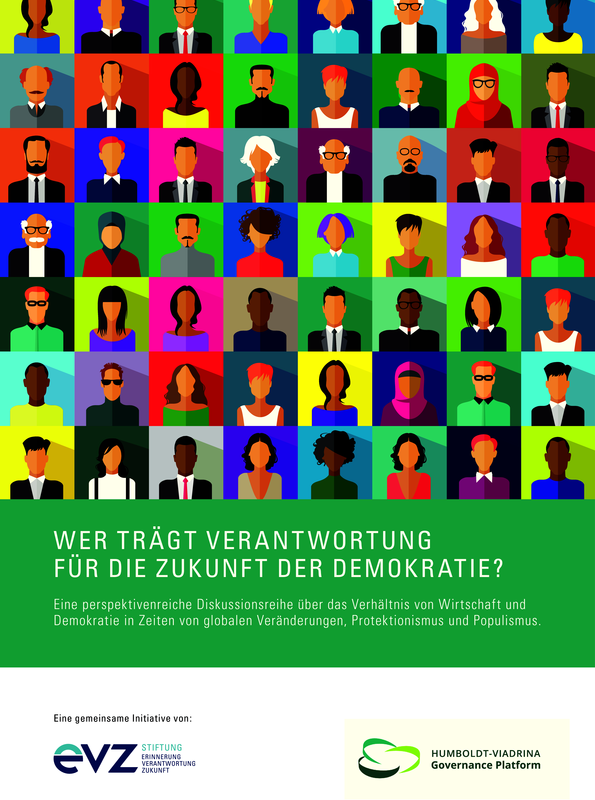
    "Who is responsible for the future of democracy? - A perspective-rich series of discussions on the relationship between business and democracy in times of global change, protectionism and populism." - a joint [...]
  • Guidelines for participation in state-owned housing construction

    In 2017, the Berlin Governance Platform, in cooperation with the state-owned housing associations, held a trialogue series on the topic of "Participation in housing construction" in order to discuss these challenges of the growing city in a public interest-oriented [...].
  • Trialogue series: German special path?

    On behalf of the Senate Department for Urban Development and Housing and the Mitte district office of Berlin, we are realising digital citizen participation: The "Voices at the push of a button" project collects ideas via voice messages for the [...]
  • The working time dialogue in trialogue format

    Against the background of technological innovations as well as demographic and cultural changes, which are accompanied by new demands on the organisation of work, ways of shaping an innovative working time policy will be discussed.
  • The logo of the Berlin Governance Platform in three colours as a favicon. We work as a non-profit organisation in the service of promoting good governance, developing projects and concepts. We create spaces for all those who want to help shape a just and sustainable future.

    Trialogues on the compatibility of family and career in partnership

    Trialogues on the topics of work (time) culture and equality with the Federal Ministry for Family Affairs, Senior Citizens, Women and Youth.
  • Voices at the touch of a button: citizen participation via voice messages

    On behalf of the Senate Department for Urban Development and Housing and the Mitte district office of Berlin, we are realising digital citizen participation: The "Voices at the push of a button" project collects ideas via voice messages for the [...]
  • In Arneburg-Goldbeck, a municipal development council advises on the development of the municipality

    Municipal Development Council in Arneburg-Goldbeck

    In Arneburg-Goldbeck, a municipal development advisory board was to draw up recommendations for improving mobility in rural areas.
  • Trialogue series "Energy Systems of the Future" (ESYS)

    The Berlin Governance Platform, in cooperation with the academy project "Energy Systems of the Future", conducts trials as sounding boards for the working groups of the academy project.
  • Trialogue "Science Platform Sustainability 2030"

    In cooperation with the Mobility Working Group of the Science Platform Sustainability 2030, the Berlin Governance Platform held the trialogue "Sustainable on the move - making mobility attractive now".
  • Energiewende PartnerStadt - Sharing municipal knowledge in Europe

    The aim of the "Energiewende PartnerStadt" project was to exchange expertise and experience on the local energy transition across national borders, facilitate technology transfer in the field of renewable energies and promote cohesion in Europe.
  • Additional benefits as a driver of energy-efficient building refurbishment

    The project "Additional benefits as a driver of energy-efficient building refurbishment" aimed to bring more clarity to the social debate on the multiple benefits of energy-efficient refurbishment.
  • Garment Industries Transparency Initiative (GITI)

    The Garment Industries Transparency Initiative (GITI) is a multi-stakeholder partnership with the aim of contributing to the implementation of labour standards in the global garment industries through improved transparency and participation.
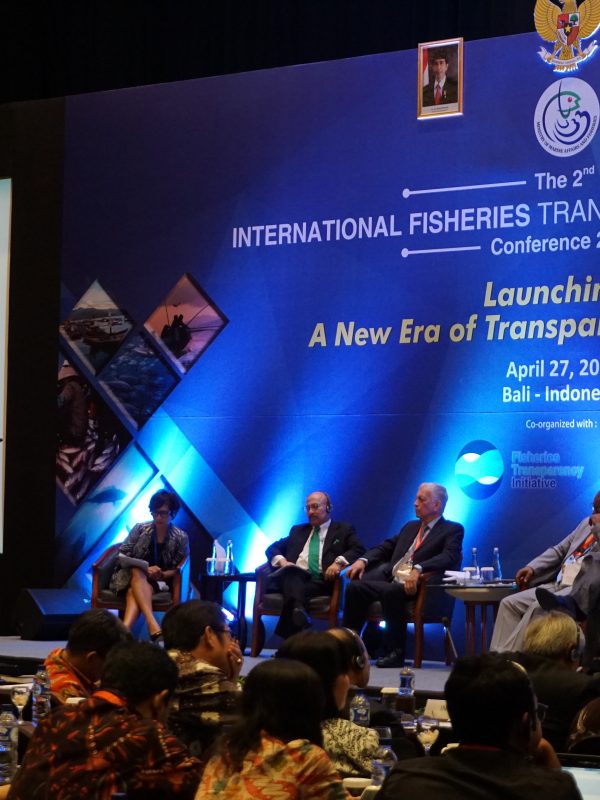
  • Photo at a conference of the Fisheries Transparency Initiative.

    Fisheries Transparency Initiative (FiTI)

    The Fisheries Transparency Initiative (FiTI) is a global multi-stakeholder partnership to strengthen transparency and participation for sustainable fisheries.
  • Centre on Governance through Human Rights

    The Centre on Governance through Human Rights of the Berlin Governance Platform in Berlin advises on governance and human rights issues. Transitional justice in transitional societies, climate justice and cyber justice (human rights [...])
  • International exchange Berlin-Minsk

    The bilateral project "Cities for Citizens" brings together German and Belarusian experts from politics & administration, business and organised civil society in Trialogue ® in order to integrate their accumulated knowledge into current [...]
  • New Urban Agenda Berlin

    During the two-year project period (2018 to 2020), TU Berlin, in cooperation with the Berlin Governance Platform, organised four trialogues and four trialogue project groups on the urban policy challenges of mobility, immigration, housing [...].
  • EnVision

    The project "EnVision - Shaping a vision for the energy transition" identifies areas of tension and conflicting values in the energy transition and develops proposals for political decision-makers to develop a common vision.