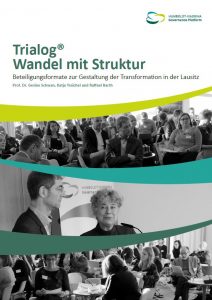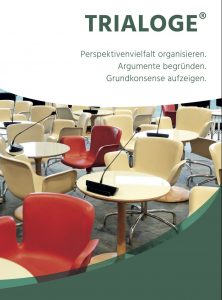
Trialogues provide a structured framework within which politics and public administration, business, organised civil society and academia can engage in dialogue. You promote understanding where complex or conflict-ridden issues require a diversity of perspectives, open up new approaches to intractable debates, and make different interests, bodies of knowledge, and consensus corridors visible. Trialogues prepare sound decisions.
The Berlin Governance Platform has developed the trialogue approach and has applied and continuously refined it in more than 60 dialogue processes since 2014. This long-standing experience is incorporated into the conception, moderation, and evaluation of every trialogue, enabling us to tailor the format precisely to different topics, stakeholder constellations, and decision-making processes.
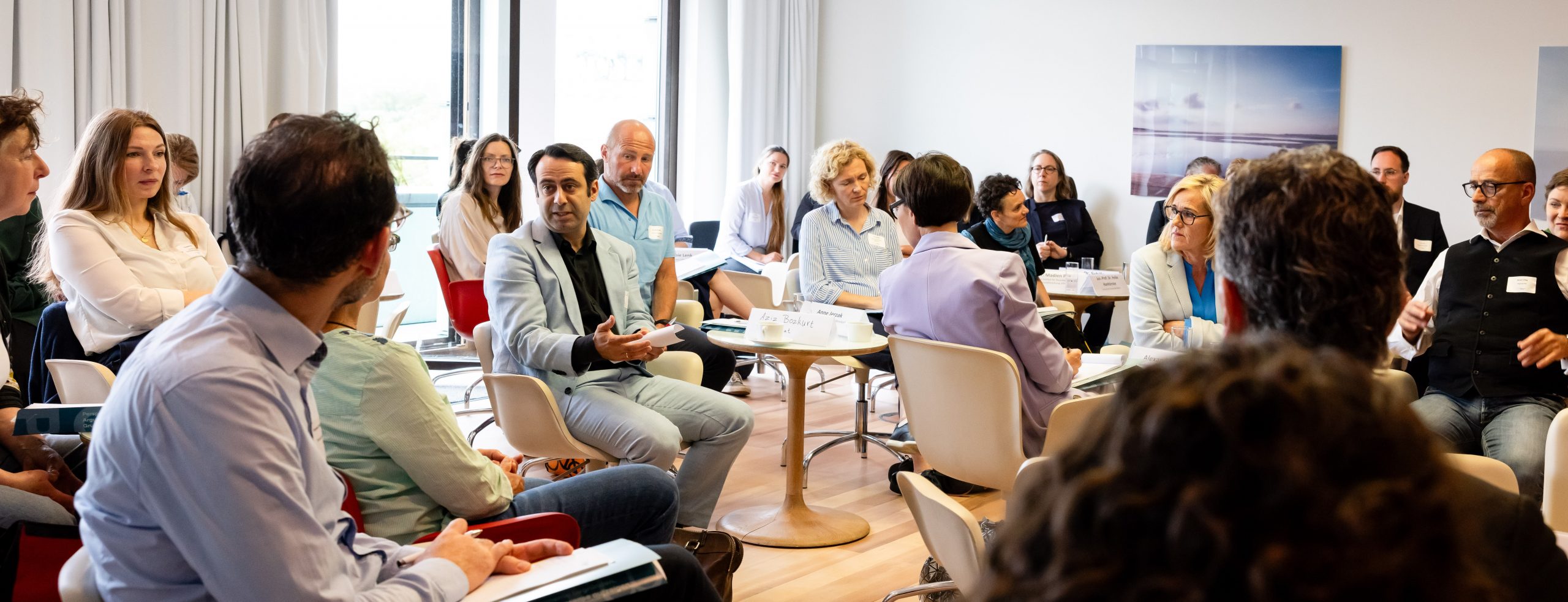
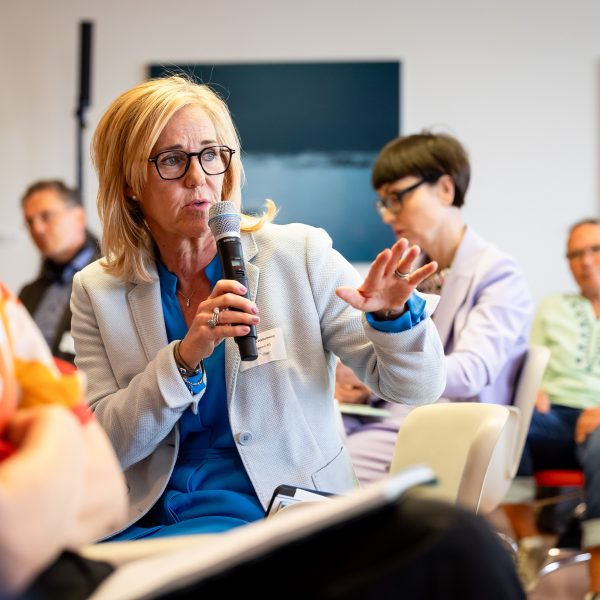
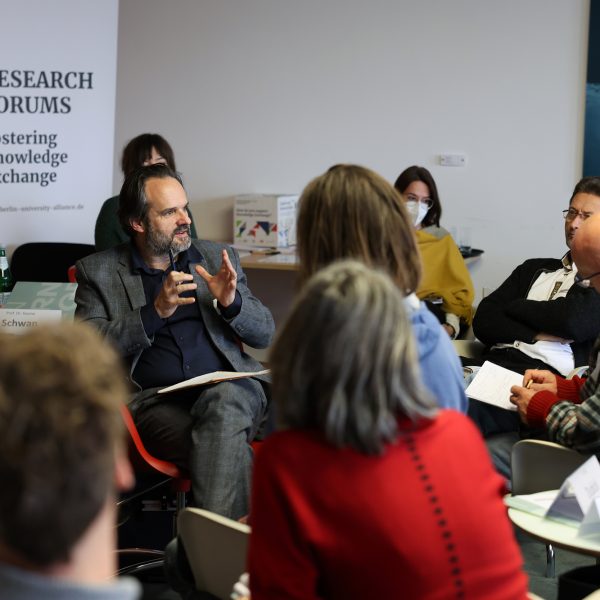
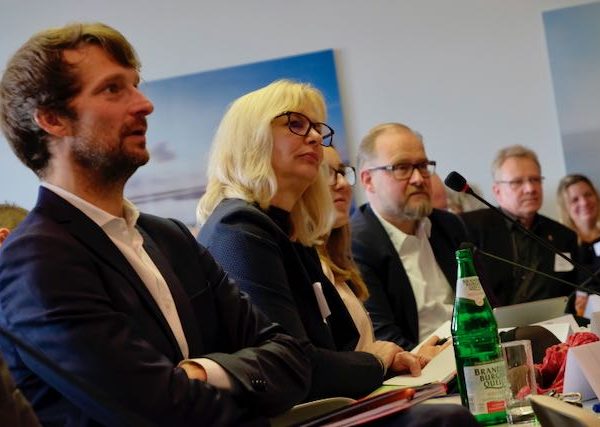
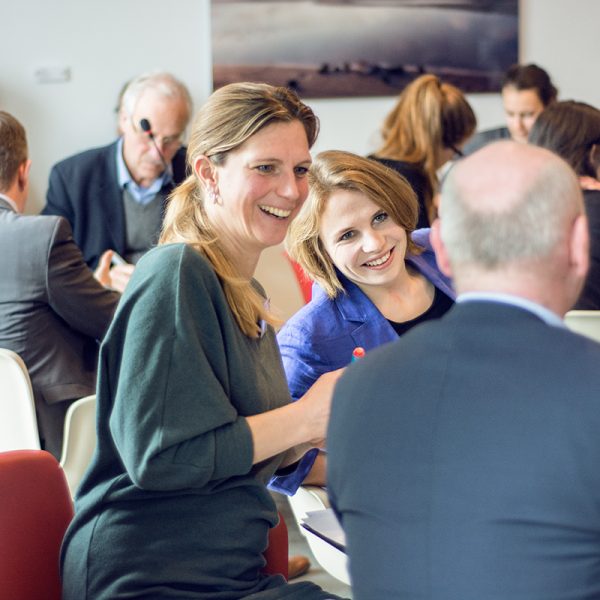
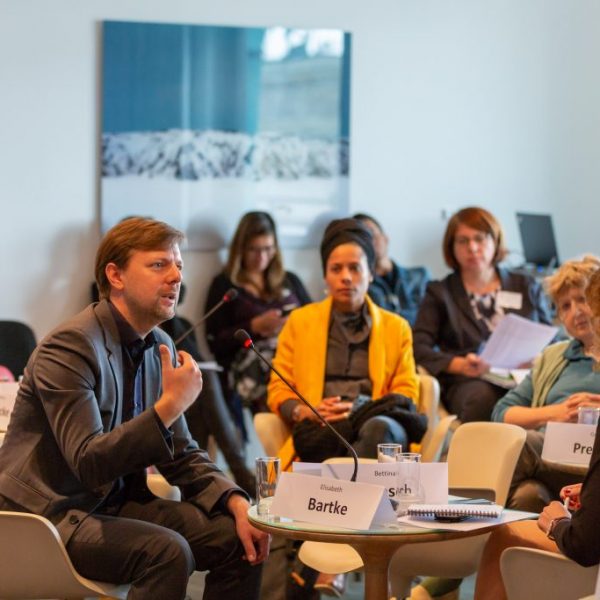
Trialogues events last one or more days and involve up to 50 participants from the worlds of politics, public administration, business and organised civil society. Unlike a panel discussion, a trialogue is structured around short contributions and inputs from the entire group of participants. Of central importance is the moderated discussion involving all participants in the plenary session. The academic community and the media do not participate in the trialogue as stakeholders. The academic community contributes its information and insights to the Trialogues, whilst the media – without naming the participants – ensure that these are disseminated to the public.
Trialogues sessions are usually recorded and transcribed. A social science analysis of the discussion is carried out on the basis of the transcript. Qualitative analysis is used to identify common ground between arguments, problem areas and options for action. The aim is to identify areas of fundamental consensus within which sustainable decisions can be made in politics, business and society. In accordance with the Chatham House Rule, the evaluation of the entire trialogue process will be published on our website at the end – for example, in the form of a report.
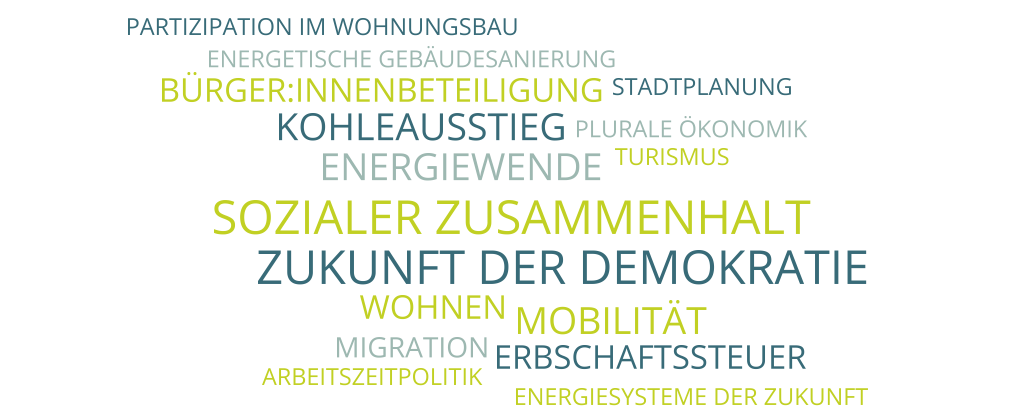
The Berlin Governance Platform has many years’ experience in organising Trialoguesn events. Trialogues events have already been held – or are currently being planned – on the following topics, such as the Trialogue series on inheritance tax:
Trialogues bring together as many different and sometimes antagonistic perspectives as possible. Due to their different functions, experiences and power potentials, stakeholders cover a broad spectrum of important societal perspectives.
The participants of trialogues justify their positions in the discussion and respond to the previously mentioned arguments. This forms the basis for a new understanding and a change of perspective, so that the conversation can take new directions and discover new common ground. The Trialogues take place in compliance with the Chatham House Rule and create a confidential space.
It is important for us to ensure that the results of a Trialogue are comprehensible and support processes for sustainable decisions. For this reason, the rigorous processing and analysis of the trialogue is an essential part of the concept. By scientifically evaluating the transcript, we work out how the different arguments relate to each other and identify the common ground on which sustainable decisions can be prepared.
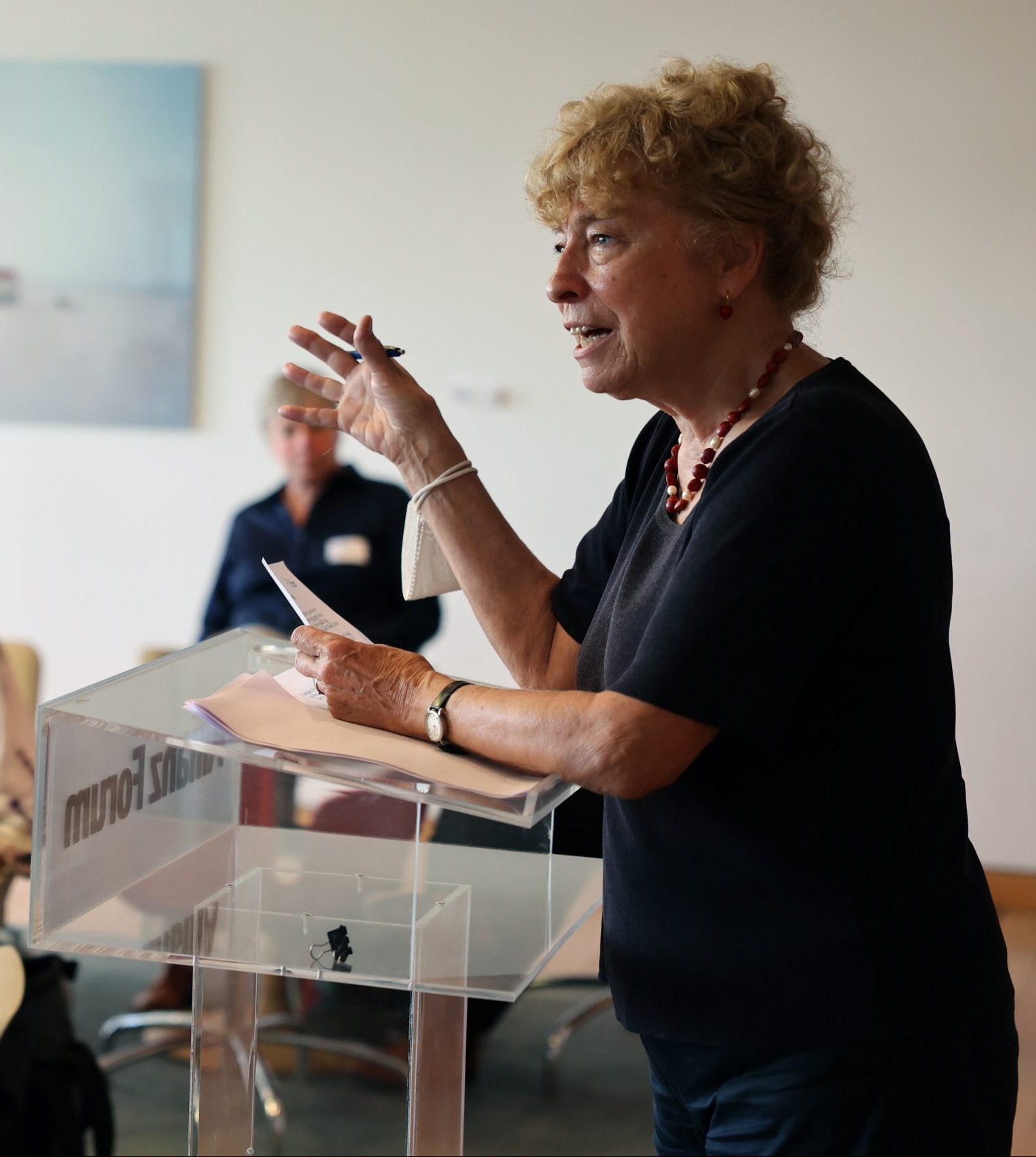
A Trialogue is a one-day event with approximately 30-50 participants from politics and administration, business, and organized civil society. A Trialogue usually lasts eight hours (9:00-17:00). Depending on the complexity of the topic, a series of several Trialogue events is possible, each with a different thematic angle.
A Trialogue can be organized on a wide range of topics. In general, the topic should be relevant to society as a whole. Recent trialogues addressed topics such as energy transition, urban development, work and family, the future of democracy, and the question of social cohesion.
For the implementation of a trialogue, at least one person is needed who works closely with us as a team during the preparation. The documentation and moderation is usually done by staff members of the Berlin Governance Platform. If desired, Knowledge Atlases an interactive documentation of the discussion results is possible via our knowledge atlases.