Democracy

We bring together policy-makers (including administrators), business leaders and organized civil society to jointly develop strategies for the challenges of our time. We support a policy making that moves away from reactive crisis management and pro-actively develops concepts for a just and sustainable future.

Making democracy tangible.

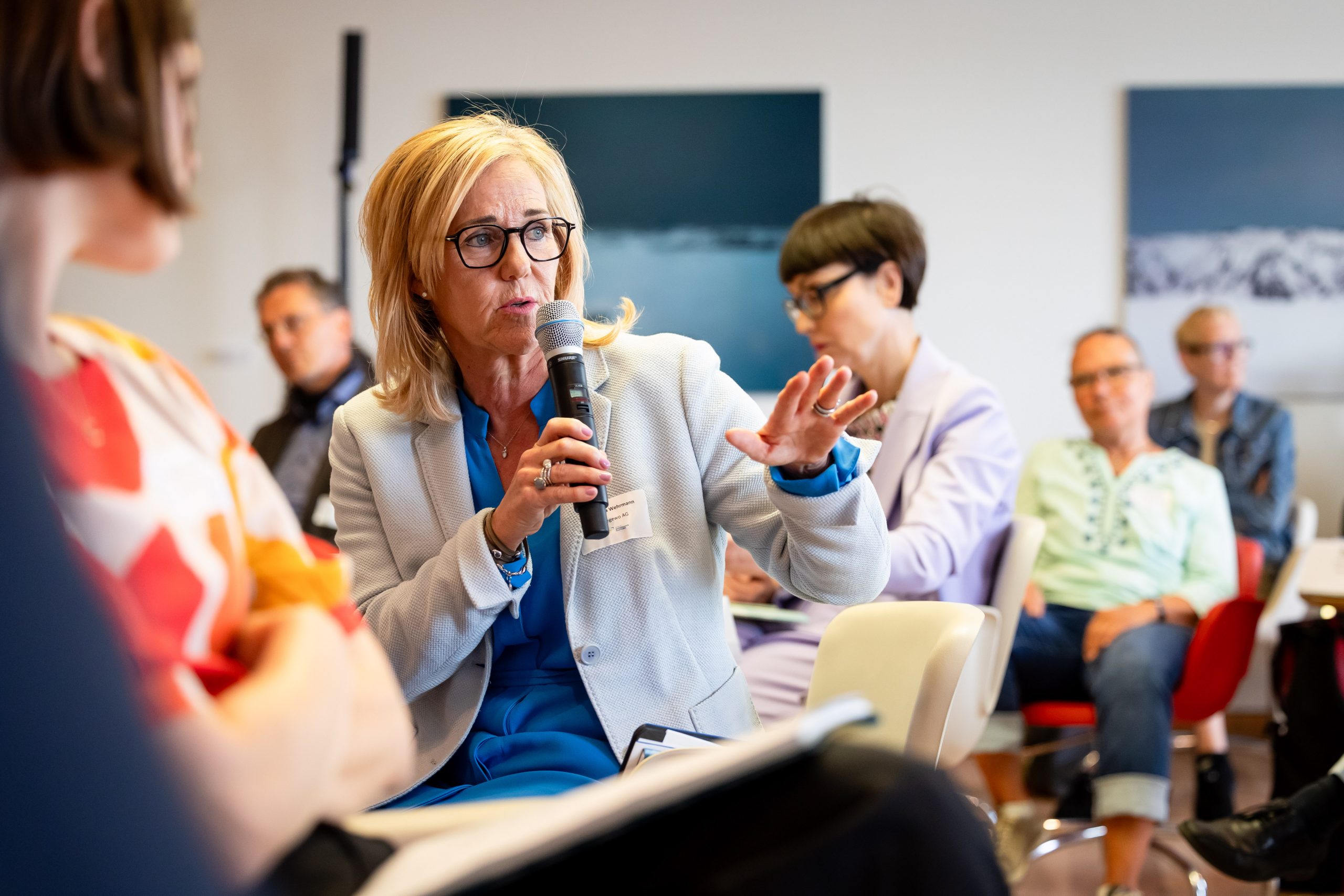
Democracy is in a credibility crisis. Trust in democratic structures is at an all-time low, and right-wing extremist tendencies are increasingly established throughout. For most citizens, democracy is an abstract concept that plays no role in their everyday lives. Many no longer believe in their own political efficacy. This must change. We believe that democracy can come alive and be actively experienced when members of a democratic society come together to jointly develop strategies for dealing with crises and challenges. For this to happen, it is important that those actors meet on an equal level, allowing new strategies to incorporate different perspectives. This has the potential to enhance credibility of policies and there with sustainability of their implementation. We enable this process by facilitating constructive, power-sensitive dialogue – although with a willingness to expand the comfort zone of discussion. Such an approach requires the willingness of all participants to compromise – increasingly rare in a polarized society. For us, working on the topic of democracy always means working on relationships, because that's the only way to build trust and enable a change of perspective.

"

Political decisions need a broader basis than before if they are to find sustainable solutions in our changing, global capitalist society. Elected politicians must join with organized civil society and the business sector to evaluate decisions and positions. This must happen at all levels, from the local to the global.

Prof. Dr. Gesine Schwan

Complex challenges require more participation.

However, trust in democratic processes is also based on what is known as "output" legitimacy, i.e. on the concrete results of political decision-making. It is often said that politicians are too far removed from everyday life to be able to make adequate policies. We believe that politicians alone can neither fully grasp nor shape the complex reality as a whole, and therefore rely on intermediaries to bring in relevant perspectives in the political decision-making process. Our approach to enhance this is (citizens) participation rather than lobbing. We believe the most proliferate and sustainable way to make policies is by creating spaces, where different perspectives can be discussed and policies jointly developed. Only such a dialogical approach utilizes the necessary creativity and expertise to find sustainable and effective solutions to the challenges of our time.

Projects on this topic

  • Trialog zur Reform der Erbschaftssteuer

    In einer mehrteiligen Dialogreihe bringen wir unterschiedliche gesellschaftliche Perspektiven zusammen, um Reformoptionen für die Erbschaftsteuer zu beraten und zukunftsweisende Empfehlungen für die Bundesregierung zu entwickeln.
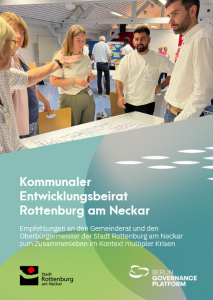
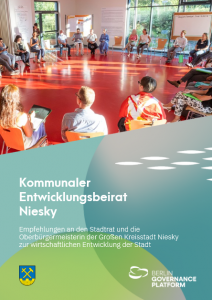
  • Kommunale Entwicklungsbeiräte in der Wärmewende

    Wir begleiten über ein Jahr lang augewählte Kommunen bei der Entwicklung praxisnaher, breit getragener Strategien für die lokale Wärmewende in Kommunalen Entwicklungsbeiräten.
  • Kommunaler Entwicklungsbeirat in Cottbus/Chóśebuz

    Inmitten der Innenstadt von Cottbus befindet sich eine prominente Brachfläche, die kürzlich von der Stadt erworben wurde. Ein Kommunaler Entwicklungsbeirat versammelt diverse Akteur*innen, um Empfehlungen für die zukünftige Nutzung dieser […]
  • Kommunaler Entwicklungsbeirat in Frankfurt (Oder)

    Ein Kommunaler Entwicklungsbeirät entwickelte ein Leitbild für die Entwicklung einer Freifläche direkt an der Stadtbrücke, die Frankfurt (Oder) und Słubice miteinander verbinden.
  • Energiewende Partnerstadt 3.0

    Ziel des Projekts „Energiewende Partnerstadt 3.0“ ist es, über Ländergrenzen hinaus Know-how und Erfahrungen zur lokalen Energiewende auszutauschen, den Technologietransfer im Bereich Erneuerbare Energien zu erleichtern und den Zusammenhalt in […]
  • Kommunaler Entwicklungsbeirat in Duisburg

    Duisburg-Hochfeld, einst von der Schwerindustrie geprägt, steht prototypisch für Gebiete im Ruhrgebiet, die vom Strukturwandel betroffen sind. Ein kommunaler Entwicklungsbeirat berät über Möglichkeiten, die Lebensqualität der Bürger*innen im Stadtteil zu […]
  • Kommunaler Entwicklungsbeirat in der Samtgemeinde Meinersen

    Ein kommunaler Entwicklungsbeirat spielt eine Schlüsselrolle bei der Gestaltung von Klimaschutzmaßnahmen in der niedersächsischen Samtgemeinde Meinersen. Dieser Beteiligungsrahmen zielt darauf ab, den Entwicklungsprozess transparent zu gestalten, die Legitimität der erarbeiteten […]
  • Offering refugees a home in Berlin

    How can refugees find adequate and affordable housing in Berlin? In the midst of a tight housing market and numerous barriers to access, we are developing ideas for possible solutions with policymakers, civil society and the real estate industry.
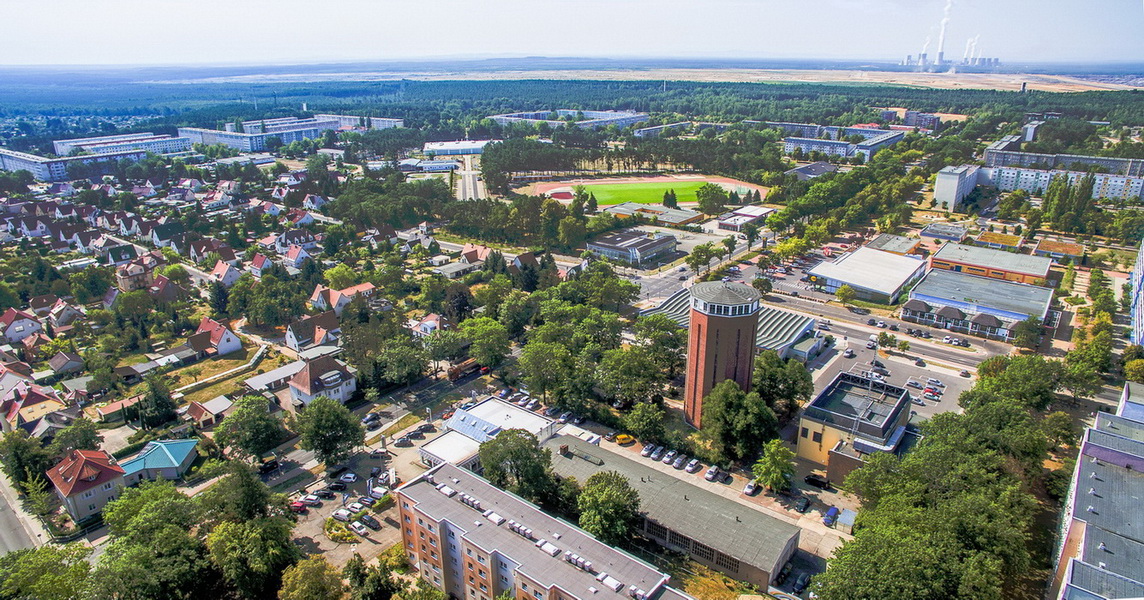
  • A municipal development advisory board accompanies the urban development in Weißwasser/O.L.

    Kommunaler Entwicklungsbeirat in Weißwasser/O.L.

    Für die Stadt Weißwasser stehen in den nächsten Jahren große Veränderungen an: die zentrale Versorgung mit Braunkohle wird ab 2029 ein Ende haben. Ein Kommunaler Entwicklungsbeirat berät zur Zeit, wie […]
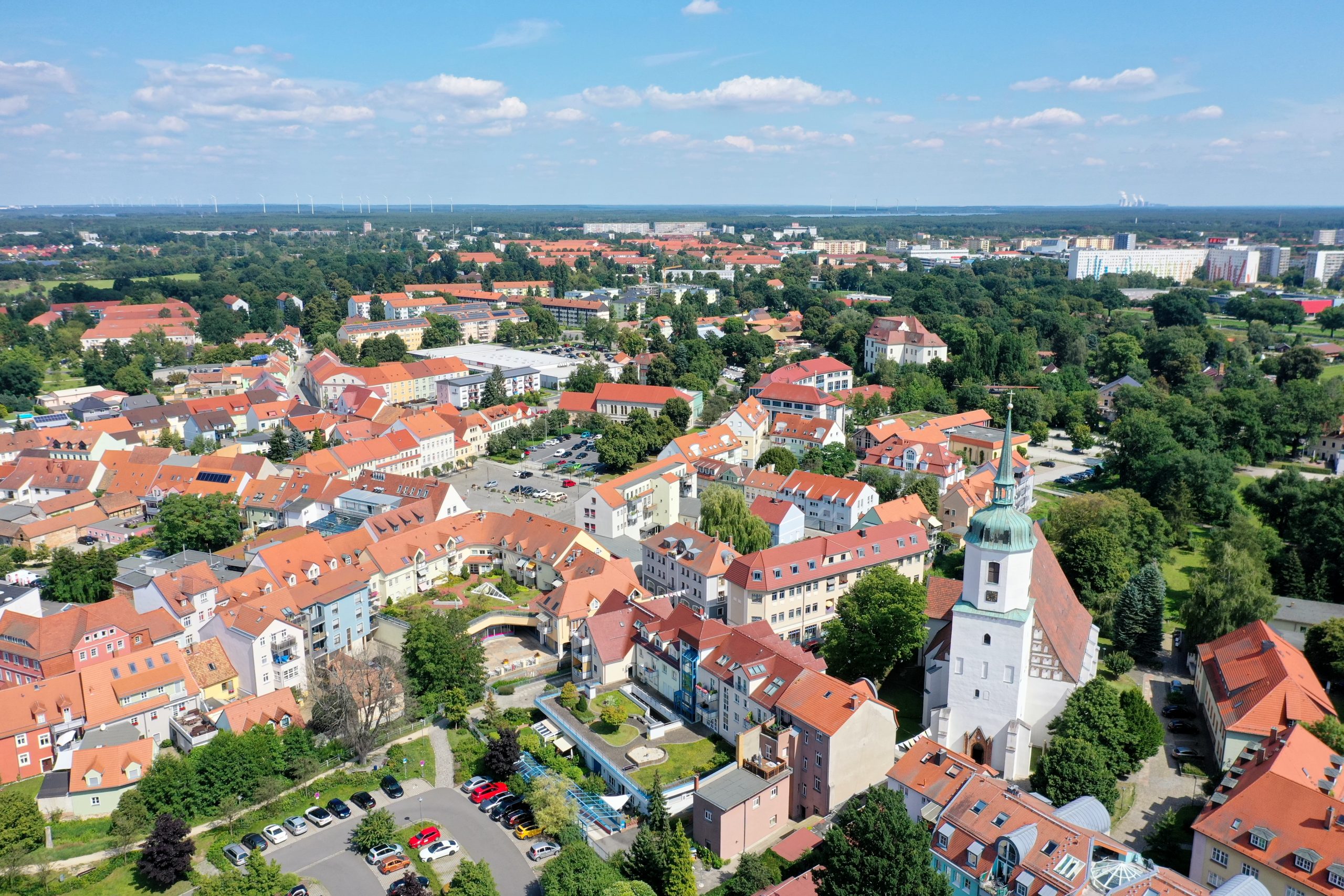
  • In Hoyerswerda, a municipal development advisory board discusses the use of green and demolition sites

    Kommunaler Entwicklungsbeirat in Hoyerswerda

    In Hoyerswerda berät ein kommunaler Entwicklungsbeirat über die Nutzung von städtischen Grün- und Abrissflächen. Es soll ein „Grüner Saum“ entstehen.

Publications on this topic